

Best Deck Materials for 2026: Wood, Composite & PVC Options for New Jersey Homes
Key Takeaways
Choosing the right decking material matters more in New Jersey than in milder climates. With over 50 freeze-thaw cycles per season, humidity averaging 70-80%, and coastal salt exposure in many areas, your deck faces constant stress that accelerates wear on traditional materials.
- Four main deck material options exist in 2026: pressure treated wood (budget-friendly but high maintenance), natural hardwoods like cedar and ipe (beautiful but demanding), composite decking (low maintenance wood-look), and PVC decking (premium all-plastic durability)
- Composite and PVC decking deliver the best long-term value for most NJ homeowners, with 25-50 year lifespans and minimal maintenance compared to wood’s 15-20 years
- Upfront cost doesn’t tell the whole story: pressure treated lumber costs $3-6 per square foot but requires $500-1,000 annually in upkeep, while composite and PVC reduce lifetime costs by 40-60%
- American Home Remodeling helps homeowners evaluate deck materials, design layouts, handle deck framing, manage permits, and coordinate exterior upgrades like roofing and siding
- Financing makes premium materials accessible: qualified customers can access 100% financing including 0% APR for up to 18 months
Introduction: How Deck Materials Shape Your Outdoor Space
Your choice of decking material affects everything from how long your deck lasts to how it feels under bare feet on a July afternoon. The material type determines whether you’ll spend weekends staining and sealing or simply hosing off dirt before a backyard barbecue.
In 2026, New Jersey homeowners are increasingly replacing aging wood decks with composite and PVC options. The reason is practical: humidity, snow, and freeze-thaw damage take a brutal toll on traditional wooden deck surfaces, driving up maintenance costs and shortening lifespans. Industry data shows composite installations have surged 35% year-over-year in the Northeast as homeowners prioritize low maintenance solutions that also boost resale value by 7-12%.
When we talk about deck material, we mean both the visible deck boards you walk on and the hidden structural elements like deck framing and fasteners. This guide focuses primarily on the surface materials homeowners see and touch daily, helping you identify the best decking materials for your property.
American Home Remodeling, based in Irvington, NJ, designs and builds decks throughout Essex, Union, Morris, Bergen, Passaic, and Somerset counties—plus Staten Island, Rockland, and Westchester. They handle permits, offer 100% financing for qualified customers, and coordinate related exterior work to maximize your investment.
Core Deck Material Options in 2026
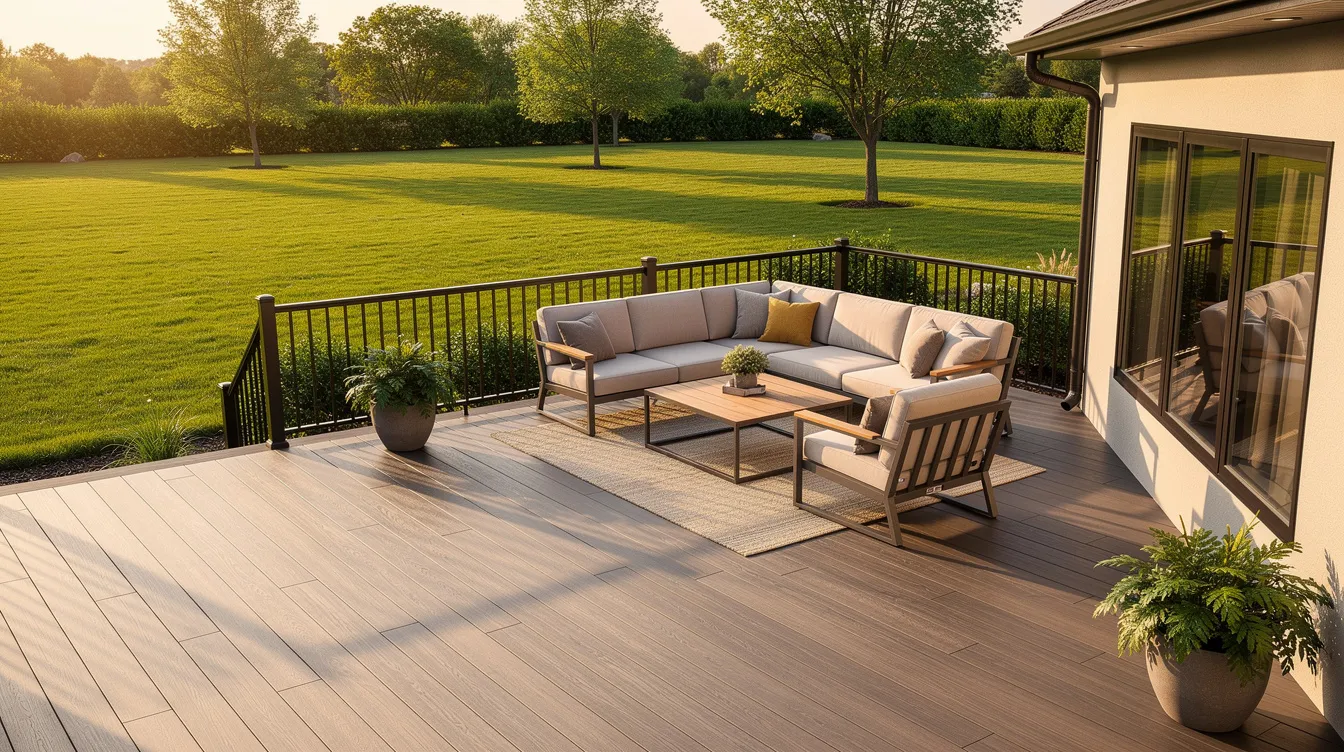
Most residential decks are built from four main surface material categories, each occupying a different position on the spectrum of cost, maintenance, and appearance.
- Pressure treated lumber: Most affordable upfront, requires ongoing maintenance every 1-3 years, familiar wood appearance
- Natural wood (cedar, redwood, exotic hardwoods): Premium aesthetics with authentic grain patterns, moderate to high cost, regular maintenance required
- Composite deck boards: Mid-to-high cost, minimal maintenance, made from recycled materials including wood fibers and recycled plastic
- PVC boards: Highest durability and moisture resistance, premium pricing, made entirely from polyvinyl chloride with no organic material
It’s important to understand that composite and PVC are two separate synthetic deck material options. Composite decking is made from a blend of wood fibers and recycled plastics, offering a durable and low-maintenance alternative to traditional wood decking. PVC decking is made entirely from plastic, making it resistant to moisture, rot, and insects, and it requires no staining or sealing.
Regardless of which surface material you choose, deck framing is almost always pressure treated lumber or steel. American Home Remodeling inspects or replaces framing as needed to ensure your new deck performs as expected.
Pressure-Treated Wood Decking
Pressure treated wood—typically Southern yellow pine—remains the most common budget-friendly deck material in New Jersey. The lumber is chemically treated through a pressurized process that forces preservatives 2-4 inches deep, creating resistance to rot and insect damage.
Pressure-treated wood is one of the most widely used decking materials, infused with chemicals to resist insects and decay, but it requires regular maintenance to prevent warping and splintering. In NJ’s climate, expect a lifespan of about 15-20 years with consistent care. However, shaded yards in Essex, Union, and Bergen counties—where humidity lingers—can accelerate wear, sometimes reducing lifespan to 12-18 years.
Pros:
- Pressure-treated wood is the most affordable decking material option, typically priced around $3 to $6 per square foot
- Easy to source from any lumber yard
- Simple for deck framing and deck boards installation
- Can be stained or painted any color
Cons:
- Pressure-treated wood requires maintenance every 1-3 years, including sanding, staining, and sealing, to prevent fading, cracking, and splintering
- Tendency to warp, cup, and splinter over time
- Frequent maintenance adds up—expect $500-1,000 annually for a 400 square foot deck
This real wood option suits homeowners on strict budgets or those planning short-term stays before selling. American Home Remodeling can design low-maintenance layouts even with treated lumber—elevated designs that minimize ground moisture contact and strategic drainage to extend your deck’s life.
Traditional Wood Decking: Cedar, Redwood & Hardwoods
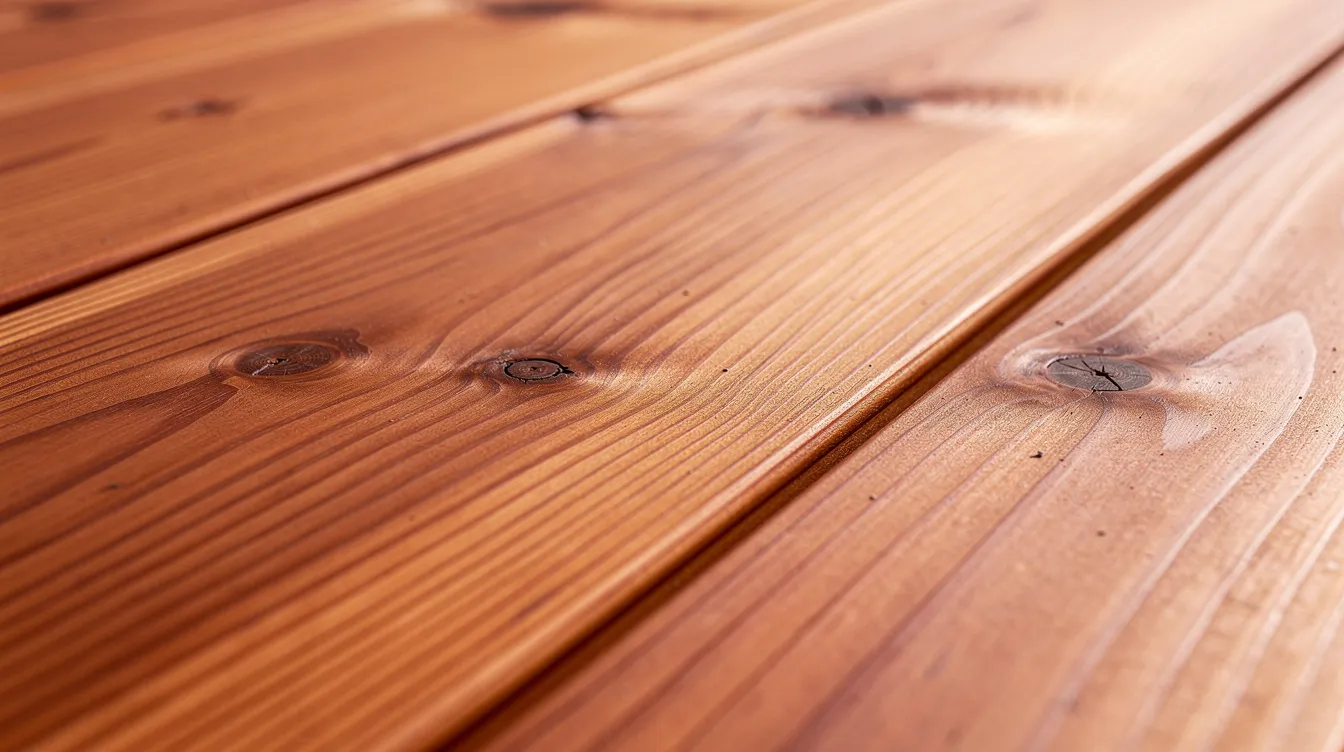
For homeowners who prioritize natural beauty and authentic aesthetics, traditional wood decking offers warmth that synthetic materials can’t perfectly replicate. Wood decking materials, such as cedar and ipe, are valued for their rich colors and naturally variegated patterns, providing a warm and inviting aesthetic that many homeowners find appealing.
Softwood Options (Cedar, Redwood): Cedar and redwood are naturally resistant to rot and insects, providing a high-end aesthetic but require regular maintenance. Western red cedar costs $6-10 per square foot and weathers to a silver patina if left untreated. Without biannual sealing, expect 15% graying within a few years. These softwoods work well for homeowners who appreciate the natural aging process or commit to annual maintenance.
Hardwood Options (Ipe, Mahogany): Tropical hardwoods like Brazilian ipe represent the premium tier of natural wood. Exotic hardwoods are extremely dense and durable, lasting for decades, but they are very expensive and difficult to work with. Ipe wood is known for its exceptional strength and longevity, lasting up to 75 years when properly maintained, but it requires regular upkeep to preserve its appearance. At $12-18 per square foot, ipe demands carbide tools and pre-drilling during installation.
When American Home Remodeling Recommends Natural Wood:
- Historic homes in areas like Montclair where matching existing millwork matters
- Specific HOA guidelines requiring wood appearance
- Luxury properties where the initial investment in premium aesthetics justifies ongoing maintenance
They can also handle related exterior work like siding replacement and masonry around the deck to create a cohesive look.
Composite Decking: Low-Maintenance, Wood-Look Boards
Composite decking has revolutionized the industry since the 1990s and now dominates 65% of new installations in the Northeast. These deck boards blend recycled plastic and wood fibers into a material that mimics real wood’s appearance while eliminating most maintenance headaches.
Composite decking is available in a wide range of colors and textures, allowing homeowners to achieve a customized look that can mimic the appearance of natural wood while offering enhanced durability. Modern capped composite deck boards feature a protective polymer shell that resists staining, fading, and moisture intrusion—critical for NJ’s wet winters and humid summers.
Key Pros:
- Composite decking can last 25-50 years with minimal maintenance, making it one of the most durable options available
- Resistance to rot, termites, and splintering
- No sanding or refinishing required
- Made from recycled materials (often 85-95% recycled content)
Key Cons:
- Higher upfront cost than pressure treated pine
- Potential for surface heat buildup in direct sunlight (mitigated by lighter color choices)
- Proper installation of composite decking typically requires a properly spaced frame to prevent sagging
The cost of composite decking typically ranges from $5 to $13 per square foot, depending on factors such as whether the boards are capped or uncapped and the materials used in the core. Despite higher initial investment, lower maintenance costs make composite one of the best long-term investments for New Jersey homeowners.
American Home Remodeling helps homeowners compare specific composite manufacturers, colors, and board profiles while ensuring framing, flashing, and drainage meet manufacturer specs for warranty protection.
Capped vs. Uncapped Composite Deck Boards
Modern composite decking features capping—a protective polymer shell wrapped around 3 or 4 sides of the core. This superior protection creates a non-porous surface that resists staining, fading, and mold growth.
Capped Benefits:
- Better color retention over decades
- Improved scratch resistance
- Significantly lower chance of mold growth
Uncapped Drawbacks:
- More vulnerable to staining from spills
- Prone to mold in humid environments
- Increasingly rare in quality 2026 installations
Think of it this way: uncapped composite exposes the wood-plastic matrix directly to the elements, while capped boards seal that core behind a protective barrier. American Home Remodeling typically recommends modern, capped composite deck boards for New Jersey’s challenging climate.
Solid vs. Grooved Composite Deck Boards
Composite deck boards come in two edge profiles that affect installation method and final appearance.
Solid (Square-Edge) Boards: Used on deck borders, stair treads, and anywhere hidden fasteners aren’t practical. Installed with color-matched exterior screws visible on the surface.
Grooved Boards: Designed for hidden fastener systems that create a cleaner surface with no visible screw heads and uniform spacing between boards. This delivers the most polished look for modern composite deck projects.
American Home Remodeling can recommend fastener systems, handle complex stair details, and tie your composite deck into other exterior improvements like new patio doors or basement walk-out rebuilds.
PVC Decking: High-Performance, All-Plastic Options
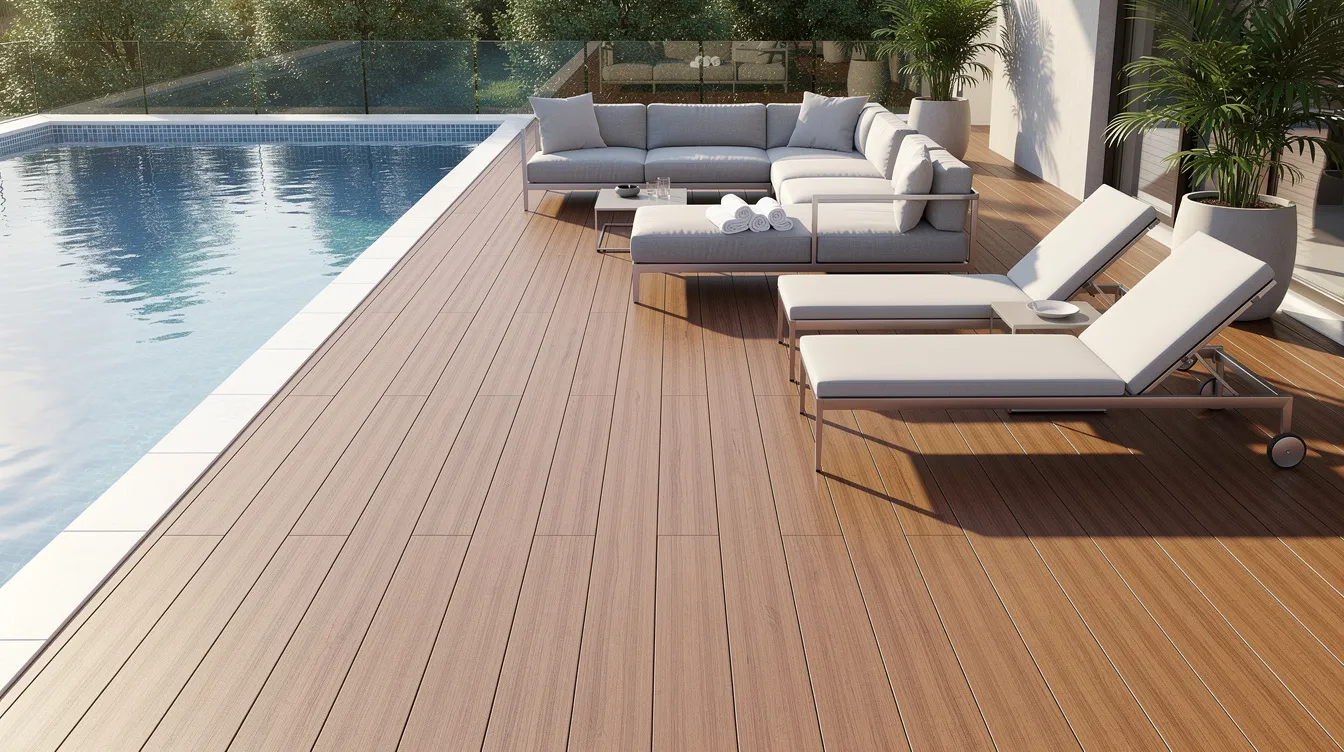
PVC decking represents the premium tier of plastic decking—fully synthetic boards made from polyvinyl chloride with no wood or organic material content. PVC decking is highly resistant to moisture, rot, and insects, making it a durable choice for areas prone to water exposure.
Advantages:
- Near-zero moisture absorption (under 0.1% per ASTM testing)
- Minimal expansion and contraction when properly installed
- Excellent performance near pools, hot tubs, or along the Jersey Shore
- Some premium 2026 lines are engineered to stay cooler underfoot and offer high slip resistant surfaces
Disadvantages:
- PVC decking tends to be among the more expensive options, with prices typically ranging from $10 to $15 per square foot
- Lower-end products may have a more “manufactured” look
- Requires specific fasteners and framing practices
PVC decking can come in various color shades and wood-grain patterns, providing a luxurious look that appeals to homeowners seeking a high-end aesthetic without the maintenance of natural wood. For many homeowners, PVC is the best material when prioritizing lifetime durability, minimal maintenance, and premium aesthetics—especially for large decks and rooftop projects American Home Remodeling undertakes.
Deck Framing and Structural Considerations
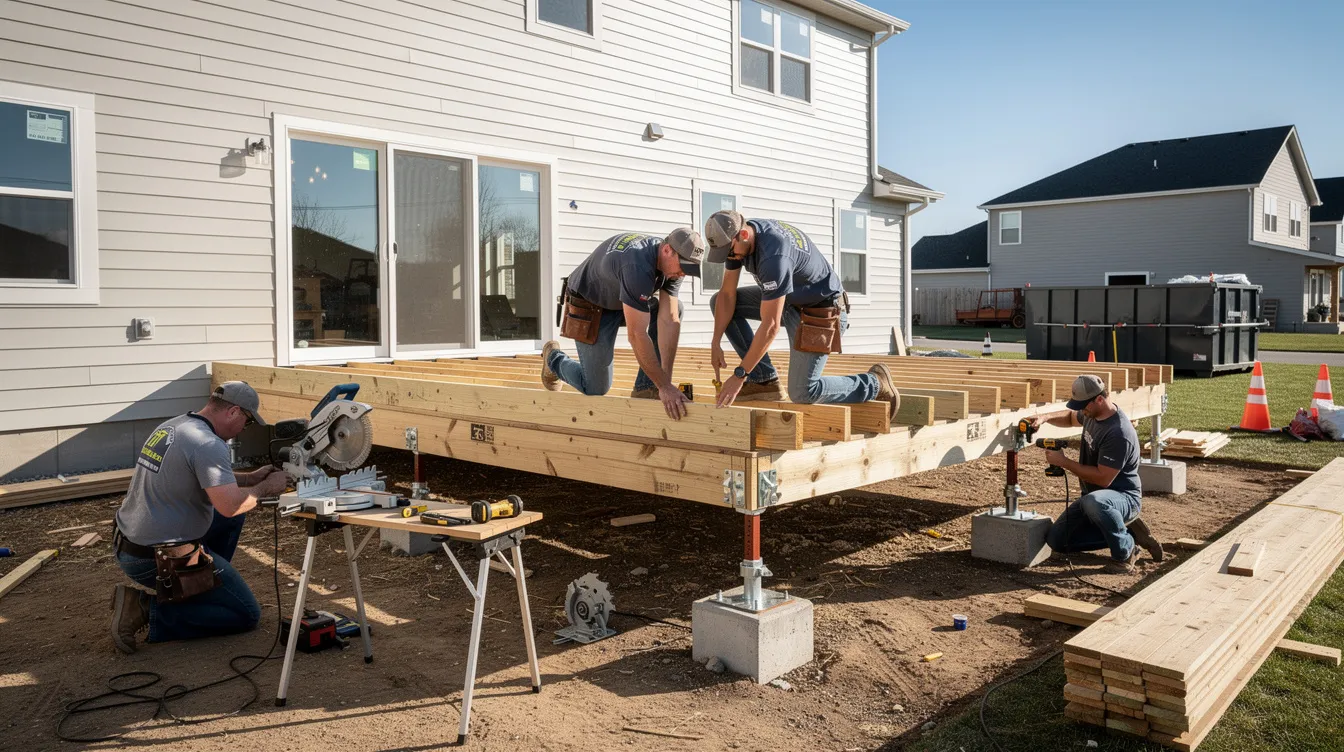
Even the best decking material will fail early if it sits on poor deck framing, improper footings, or undersized joists. Pressure-treated lumber is the standard framing material for strength and longevity, though steel deck framing is rising in popularity—up 25% in coastal NJ builds where salt air accelerates lumber corrosion. Aluminum is fireproof, will never rot, and has a high lifespan but features a more industrial look suited to specific applications.
Critical framing elements include:
- Joist spacing: Typically 12-16 inches on center, with tighter spacing required for composite and PVC to prevent flexing
- Ledger attachment: Proper flashing and lag screws prevent moisture damage where deck meets house
- Footings: Must extend below frost line to prevent heaving
Composite or PVC materials offer significant low-maintenance characteristics and longer lifespans compared to wood, but only when installed on properly built framing. American Home Remodeling evaluates existing decks to determine whether new composite or PVC decking can be installed on current structures or if framing upgrades are needed—fully licensed and insured throughout New Jersey.
Comparing Costs, Maintenance, and Lifespan
Total cost of ownership includes material, labor, and decades of maintenance—not just the price of deck boards. For best performance in decking, consider the balance of budget, durability, and maintenance needs when selecting materials.
| Material | Cost/Sq Ft | Maintenance | Lifespan |
|---|---|---|---|
| Pressure-Treated | $3-6 | Annual sealing, biannual staining | 15-20 years |
| Cedar/Redwood | $6-12 | Biannual sealing | 20-30 years |
| Composite | $5-13 | Occasional cleaning only | 25-50 years |
| PVC | $10-15 | Occasional cleaning only | 40-60 years |
| Exotic Hardwoods | $12-18+ | Annual oiling | 40-75 years |
Composite decking typically requires minimal maintenance, needing only occasional cleaning, as it does not require sanding or refinishing. PVC decking is nearly maintenance-free, as it does not require staining or sealing, making it a low-maintenance option compared to wood.
American Home Remodeling helps homeowners weigh upfront budget against long term costs, factoring in local harsh weather patterns, shade, and how often they use their outdoor space.
How to Choose the Best Deck Material for Your Home
The right decking material varies by lifestyle, budget, how long you plan to stay, and whether you prioritize low maintenance or natural wood aesthetics. There are real trade offs with every option.
Decision Criteria:
- Budget range and financing needs
- Willingness to perform or pay for ongoing maintenance
- Exposure to sun and moisture damage
- Desired color and texture (do you want authentic grain patterns or uniform synthetic?)
- Whether the deck supports heavy foot traffic or features like outdoor kitchens
Scenario Examples:
- Busy Bergen County family: Composite deck for kid-safe, splinter-free surfaces with minimal maintenance
- Sandy Hook coastal homeowner: PVC for salt and moisture resistance where other materials degrade quickly
- Montclair 1920s home restoration: Cedar deck to match historical character and existing millwork
Schedule a free, in-home consultation with American Home Remodeling to review deck material samples, discuss design options, and coordinate related improvements. They offer flexible financing options—including 0% interest for up to 18 months for qualified customers—making your dream deck more accessible regardless of material type.
Why Work with American Home Remodeling for Your Deck Project
American Home Remodeling is a full-service general contractor based in Irvington, New Jersey, with decades of experience in exterior remodeling and deck construction across North and Central NJ and nearby New York counties.
Core Strengths:
- Deep knowledge of local building codes and permit requirements
- Structural expertise in both wood and steel deck framing
- Familiarity with composite and PVC decking manufacturer guidelines for warranty-compliant installation
- Comprehensive project management from design through completion
Complementary Services: Beyond decking, they handle roofing replacement, siding updates, masonry steps and patios, kitchen and bathroom remodels opening onto decks, and basement conversions that add walk-out access—creating seamless whole-home improvements.
Service Areas: Essex, Union, Morris, Bergen, Passaic, Somerset counties, plus parts of Staten Island, Rockland, and Westchester.
Contact: 89-91 Coit Street, Irvington, NJ 07111 | Phone: 973-374-6700
Ready to build your new deck? Schedule a free consultation to discuss deck materials, layout options, and financing—and get personalized guidance on the best decking material for your property.
Frequently Asked Questions About Materials for Decks in New Jersey
These FAQs address common questions about deck ownership in our region, covering climate concerns, installation practicalities, and working with American Home Remodeling.
How does New Jersey’s climate affect which deck material I should choose?
New Jersey’s freeze-thaw cycles (50+ per season in many counties), humidity averaging 70-80%, coastal salt air, and intense summer sun create an environment that accelerates cracking, warping, and mold growth on traditional wood decks. Composite or PVC decking typically performs better as an eco friendly choice for many NJ homes due to superior moisture resistance. However, properly maintained pressure-treated or cedar decks can also perform well in less harsh microclimates with good drainage and shade. American Home Remodeling evaluates orientation, shade, and environmental impact during on-site visits to recommend materials that hold up best on your specific property.
Can I put composite or PVC decking on my existing wood deck framing?
It’s sometimes possible, but requires professional inspection of existing deck framing, ledger attachment, and footings for safety and code compliance. Composite and PVC decking often need closer joist spacing (12” vs. 16” on center) and properly flashed ledgers, so reinforcement or partial reframing may be necessary. American Home Remodeling can assess your current structure and advise whether resurfacing is safe or if a full rebuild delivers better long-term value with lower environmental concerns.
How long does it typically take to have a new deck built?
Planning and permits typically take a few weeks, with construction for a typical residential deck built ranging from several days to two weeks depending on size and complexity. Factors like material choice, weather delays, and additional work (stairs, railings, integrated lighting) affect project duration. American Home Remodeling provides projected schedules during consultation and keeps homeowners updated throughout the process.
What kind of maintenance will my composite or PVC deck still need?
These materials are low-maintenance but not completely maintenance-free. Expect occasional cleaning with mild soap and water or manufacturer-approved cleaners—typically quarterly rather than the annual maintenance wood demands. Homeowners should still inspect railings, fasteners, and deck framing periodically for safety regardless of surface material. American Home Remodeling offers guidance on maintenance routines and can refer homeowners to trusted partners for periodic inspections.
Can I finance my deck project with American Home Remodeling?
Yes—American Home Remodeling offers flexible financing options for qualified customers, including up to 100% financing and promotional 0% interest periods for up to 18 months. This cost effective approach makes higher-quality wood products like composite and PVC decking more accessible while spreading payments over time. Discuss financing during your free consultation or call 973-374-6700 for current program details and eligibility requirements.