

Wooden Decking for New Jersey Homes: Materials, Costs & Design Guide
This guide walks New Jersey homeowners through every major decision involved in choosing, designing, and building a wooden decking project-from material selection and local code requirements to long-term maintenance planning.
Key Takeaways
This guide helps New Jersey homeowners choose between wood decking and composite decking, drawing on decades of real-world deck project experience from American Home Remodeling, which has been serving homeowners since 2000.
- Wooden decking is typically more budget-friendly than composite alternatives, with pressure treated pine starting around $15–$25 per square foot installed in NJ, while composite decking runs $30–$55. Wood decks have an ROI of around 80 percent at resale, compared to roughly 68 percent for composite decks.
- In New Jersey's four-season climate-snow, summer sun, coastal humidity-material choice and proper installation by a licensed contractor matter more than anything for longevity.
- American Home Remodeling designs and builds custom decks and porches across New Jersey, Staten Island, Rockland, and Westchester, with financing options including 0% interest up to 18 months for qualified homeowners.
Schedule a free, no-obligation deck consultation by calling 973-374-6700 or filling out a form on the website.
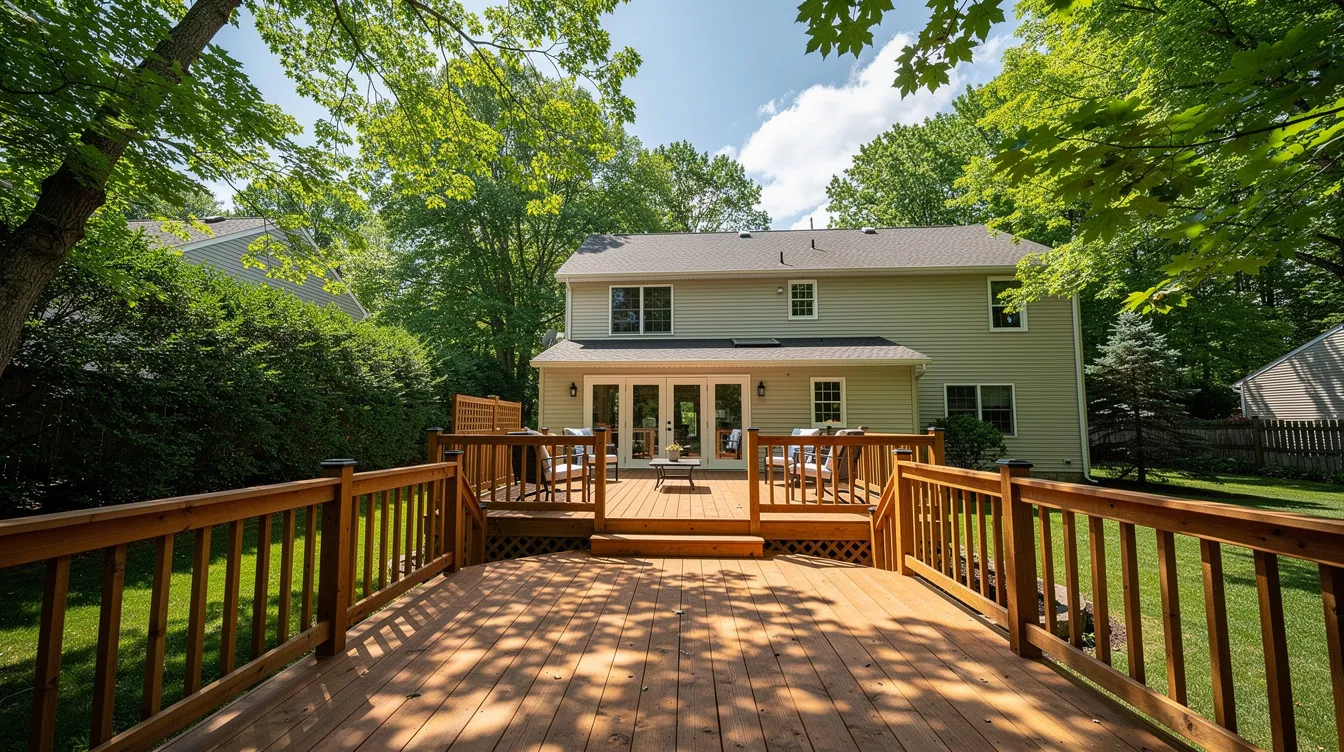
Wood Decking vs. Composite Decking: What's Best for New Jersey?
Wood decking has been popular since the late 1800s, and over the last 25 years composite decking has become a major alternative for New Jersey backyards. Both have clear strengths, but the right decking depends on your priorities.
Here's how they compare in NJ:
- Initial cost: Pressure treated wood decking runs roughly $15–$25/sq ft installed, while composite decking material typically costs $30–$55/sq ft installed.
- Lifespan: Well-maintained real wood decks last 15–25 years. Composite decking can reach 25–35 years with minimal upkeep.
- Maintenance: Wood decking requires annual cleaning plus staining or sealing every 2–3 years. Composite is a low maintenance option-periodic soap-and-water cleaning is usually sufficient.
- Feel underfoot: Wood decks provide a cooler surface underfoot in summer than most composites. Composite decking is made from sawdust and plastic, which can retain heat, especially in darker colors. However, composite decking can sometimes "ugly out" before it actually wears out-fading or surface changes that don't affect structural integrity.
Wood decking provides a durable surface for entertainment and offers a natural and warm aesthetic that's hard to replicate. In markets like Essex, Bergen, and Morris Counties, that beauty can deliver strong ROI when selling a home.
American Home Remodeling typically recommends wood when homeowners want a natural look and lower upfront cost, and composite when shade, moisture exposure, or a desire for maintenance free living drives the decision. Both options need a properly built substructure that meets New Jersey building codes, which American Home Remodeling handles as a licensed general contractor.
Hardwood vs. Softwood Decking: Understanding Your Wood Choices
The difference between hardwood and softwood decking comes down to density, durability, and cost. Hardwoods are denser, harder, and more resistant to wear. Softwoods grow faster, cost less, and are easier to work with.
Hardwood species commonly considered in the Northeast include teak, ipe, brazilian cherry, oak, and mahogany. These tropical hardwood options offer superior durability, exceptional resistance to scratching and heavy furniture, and a stunning appearance-but they come at a premium price point. Tropical hardwoods can be three times more expensive than softwoods.
Softwood species include pine, fir, spruce, and cedar. Softwood decking like pressure treated pine and western red cedar is more affordable and widely available in New Jersey lumber yards, making it a frequent choice for budget-conscious projects. With proper sealing and regular maintenance, softwood decking can still perform well through NJ's freeze-thaw cycles.
From American Home Remodeling's perspective, stepping up from basic pressure treated wood to cedar or even hardwood often makes sense when a homeowner wants to reduce long-term repair and refinishing costs-especially for large entertaining decks in suburban NJ homes.

Pressure Treated Wood Decking: The Classic Budget Option
Pressure treated wood is typically southern yellow pine infused with preservatives to resist rot and insects. Pressure treated pine is economically the most common decking choice and has been widely used for New Jersey decks since the 1970s. Pressure treated wood is often made from softwood, usually pine.
Typical installed costs in NJ run $15–$25 per square foot, though actual pricing depends on deck height, railings, and site conditions.
Advantages:
- Lowest upfront cost among natural wood options
- Easy availability at any lumber yard
- Suitable for structural framing-American Home Remodeling frequently uses it for substructures even under composite boards
Drawbacks:
- Pressure treated wood requires annual or biannual maintenance (cleaning, staining, sealing)
- Tendency to crack, split, or splinter over time
- Potential concerns about chemical preservatives for households with small children and pets
New Jersey's snow loads, spring rains, and summer humidity accelerate wear on pressure treated decks if they are not properly flashed, ventilated, and maintained. American Home Remodeling can inspect older pressure treated decks for safety issues like loose railings, rot at ledger boards, and code compliance, then recommend repair or replacement, often coordinating with roofing and siding upgrades as part of a broader exterior renovation.
Redwood & Western Red Cedar Decking: Natural Beauty with Added Durability
Redwood and western red cedar are naturally rot-resistant softwood decking options that provide a warmer, more refined look than standard pressure treated pine. Both have proven themselves in demanding climates over many years.
Redwood is renowned for its natural reddish color and stability. However, redwood prices have increased due to dwindling supply, and being largely sourced from the West Coast, it's available in New Jersey by special order at a significantly higher cost. Notably, redwood is approximately 23 percent stronger than cedar.
Cedar is naturally rot-resistant and lightweight, slightly easier to source in the Northeast. Left untreated, western red cedar weathers to a beautiful silver-gray patina, or it can be stained to maintain rich, warm colors. Homeowners seeking inspiration for choosing the perfect decking color will find cedar especially versatile.
Both redwood and cedar require annual cleaning and sealing-typically every 2–3 years in NJ-to minimize surface checking and mildew. California redwood lasts long with yearly sealer application. In shore counties like Monmouth and Ocean, cedar's natural decay resistance helps in damp environments, while shaded lots in Morris or Sussex benefit from proper spacing and ventilation.
American Home Remodeling sources quality cedar and advises clients on fastener choice-stainless steel is standard to avoid staining and premature failure, and can integrate wood decking with expert paving and masonry features for cohesive outdoor living areas.
Tropical & Modified Wood Decking: Premium, Long-Lasting Options
Some New Jersey homeowners opt for tropical hardwoods or modified wood when they want a luxury feel and decades of service life. These are the materials architects and designers often turn to for high-end outdoor living spaces.
Tropical hardwoods like ipe, cumaru, and garapa are extremely dense and naturally resistant to insects and rot. Ipe is a dense hardwood that can last over 25 years-often 40 to 75 years with proper care. Ipe wood decking costs $5.85 to $7.32 per board, while cumaru wood decking is priced at $4.20 per board. Tropical hardwoods require sealing and surface treatments for longevity. However, these woods are harder to cut and fasten, which increases labor costs and lead times.
Modified wood-thermally or chemically treated softwood-is a cost-effective alternative to tropical hardwoods. Modified wood is highly moisture-resistant and insect-repellent, offering real wood appearance with improved stability and requiring only occasional cleaning for maintenance.
On sustainability, many homeowners have sought certifications like FSC for responsible forestry. Some prefer modified wood over exotics to reduce environmental impact.
American Home Remodeling recommends these premium options for clients making a long-term decision-high-end outdoor kitchens, multi-level decks with custom railings and pergolas in affluent NJ suburbs where a "one and done" upgrade is the answer.
Designing a Simple Wooden Deck for New Jersey Homes
Even a "simple wooden deck" must be carefully planned for size, layout, and code compliance to work well with a typical NJ backyard and home style. Good design is where a deck project either succeeds or falls short.
Sizing guidance:
- Common depths run 10–14 feet when connected to a home
- A 12' × 16' deck can comfortably host 8–12 people for cookouts
- A 16' × 20' deck accommodates 15–20 guests with standard furniture
Placement considerations specific to New Jersey include sun exposure, proximity to property lines under local zoning rules, and access from kitchens or family rooms. You'll need to enter the permit process before breaking ground.
Structural basics matter: footings must extend below local frost lines (roughly 2.5–3 feet deep depending on your region of NJ), ledger boards must be properly attached and flashed to the house, and railings must meet height and load requirements.
Design upgrades American Home Remodeling often adds include built-in benches, integrated lighting for safety during winter's early sunsets, and low maintenance railing systems-even on a wood deck. As a local New Jersey remodeling team, American Home Remodeling handles design, permits, demolition, and final inspections, simplifying the process for homeowners who may be building their first deck.

Maintenance, Lifespan & Cost Planning for Wood vs. Low Maintenance Decking
Total cost of ownership over 15–20 years often matters more than the initial quote when choosing between wood decking and lower-maintenance options like composite decking. The decision you make at the start affects what you're paid to maintain for years to come.
Wood deck maintenance in NJ:
- Annual washing and spring inspection after freeze-thaw cycles
- Sealing or staining wood is typically needed every 2–3 years
- Replacing damaged boards promptly helps maintain deck integrity
- Proper care involves inspecting for loose fasteners and signs of rot
- Moisture is one of the biggest contributors to wood decay, and wood decks require regular cleaning to prevent moisture buildup
Composite and modified wood:
- Periodic cleaning with soap and water; no sanding or staining
- Many carry 25–30 year warranties for fading and structural performance
Consider this comparison: a 320 sq ft pressure treated deck at ~$20/sq ft costs roughly $6,400 upfront but needs several rounds of refinishing over 15 years. A mid-tier composite deck at ~$38/sq ft costs ~$12,000 upfront but avoids most ongoing expenses. Composite often "pays for itself" versus pressure treated wood in about 8–10 years. Regular maintenance extends the lifespan of a wooden deck to 15–25+ years in New Jersey, while composite or premium hardwoods can last even longer when installed correctly.
American Home Remodeling offers services beyond new construction: resurfacing existing structures, replacing railings, or adding stairs and landings to meet current needs and codes, as well as home additions for expanding living space.
Why New Jersey Homeowners Choose American Home Remodeling for Deck Projects
Choosing a skilled, local deck contractor is just as important as selecting the right decking material. The size and complexity of your project demand hands experienced with NJ conditions.
American Home Remodeling is a New Jersey-based home remodeling contractor with decades of experience in residential remodeling and outdoor structures, fully licensed and insured.
Service area: Essex, Union, Bergen, Morris, Passaic, Hudson, and other New Jersey counties, plus Staten Island, Rockland, and Westchester.
What homeowners get:
- Adherence to manufacturer installation guidelines to preserve warranties
- One- to two-year workmanship and labor warranties on every build
- Partnerships with reputable material suppliers
- Flexible deck financing options, including up to 100% financing for qualified customers and promotional 0% interest for up to 18 months
Schedule a free in-home deck consultation today. Visit us at 89-91 Coit Street, Irvington, NJ 07111, call 973-374-6700, or request an appointment online. Whether you want to learn which wood is the great fit for your home or find a durable composite option, we'll help you build something that lasts, backed by the experience of a family-owned New Jersey remodeling company.
Wooden Decking FAQs for New Jersey Homeowners
These FAQs address common questions NJ homeowners ask American Home Remodeling about wood decking, softwood vs. composite, and local conditions.
When is the best time of year to build a wood deck in New Jersey?
American Home Remodeling builds decks year-round, but spring and fall often provide the best combination of weather and scheduling flexibility, especially if you're also planning roof replacement or repair that may affect your outdoor spaces. Summer is the busiest time, and while winter work is possible depending on frost and snow, concrete curing and finishing can be more challenging in cold weather.
Do I need a permit for a new wooden deck on my NJ home?
Most attached decks and many freestanding decks in New Jersey require permits and inspections. The permission process varies by municipality-simple plans may take 1–2 weeks, while complex projects take longer. American Home Remodeling handles drawings, applications, and coordination with local building departments so you don't have to navigate the server of municipal requirements alone.
Can I keep my existing wood frame and upgrade to composite or low maintenance decking?
In many cases, the existing pressure treated frame can be reused if it meets current code, is structurally sound, and has proper footings. American Home Remodeling inspects beams, posts, ledger connections, and edgesuite details before recommending resurfacing. This can save considerable cost compared to a full rebuild.
How should I remove snow and ice from my wood or composite deck?
Use a plastic shovel and sweep with a broom when possible. Avoid rock salt on wood decking and some composite products, as it can damage the finish. American Home Remodeling can recommend manufacturer-approved ice melt products during your consultation. You don't need http links or special tools-just a careful hand and the right products.
How long does a typical deck project take from consultation to completion?
Timelines vary by size and complexity, but many New Jersey deck projects move from initial consultation to finished construction in 4–8 weeks, including time for design, permitting, material ordering, and on-site work. For a tan or neutral-toned dock-style deck or a more elaborate multi-level design, allow extra time for custom elements, especially if you're coordinating your project with a custom kitchen remodel for seamless indoor-outdoor flow. Detailed, project-specific guidance is available during a free consultation-call 973-374-6700 to get started.