

Patio Paving Ideas: Stylish, Practical Designs for New Jersey Homes
Overview
Key Takeaways
- Paver patios can be customized with patterns, materials, and shapes to match New Jersey homes from Essex County to Monmouth County
- Core paving ideas include:
- Classic brick patterns:
- Herringbone
- Basketweave
- Running bond
- Circular/fan layouts
- Modern large-format slabs
- Natural stone looks
- Mixed paver-gravel designs
- A well-designed patio can boost curb appeal and home value, especially in competitive NJ markets like Bergen and Morris counties
- American Home Remodeling can design and build custom patios while coordinating related projects like roofing, siding, and home additions
- Schedule a free consultation with American Home Remodeling for patio and broader exterior upgrades
Introduction: Transforming Your Backyard with Smart Patio Paving
A paved patio turns a New Jersey backyard into a true outdoor room for grilling, summer parties, and quiet evenings from April through October. Your outdoor space becomes an extension of your living space when you choose the right paving stones and installation approach.
This guide is for New Jersey homeowners looking to upgrade their outdoor living spaces with stylish, durable patio paving solutions. A well-designed patio not only enhances your enjoyment of your home but also increases property value and curb appeal.
Climate and freeze-thaw cycles in NJ—especially in Essex, Union, Passaic, and Morris counties—make material choice and installation quality critical. The wrong materials or poor base preparation can lead to shifting, cracking, and costly repairs within just a few seasons.
This article walks through specific patio paving ideas, pattern options, and material choices, plus how American Home Remodeling can design a patio that ties into roofing, siding, and other exterior upgrades. Whether you have a compact suburban yard in Hudson County or a larger property in Hunterdon or Sussex County, these suggestions are tailored to typical NJ lot sizes and climate conditions.
Classic Patio Paving Patterns for Timeless NJ Backyards
Classic patterns work well with older colonials, Cape Cods, and brick-front homes common in Essex, Union, and Bergen counties. These designs create visual interest while maintaining a traditional look that complements established neighborhoods.
All examples can be done with concrete pavers, brick pavers, or clay pavers depending on budget and style preferences.
Popular Classic Patio Patterns:
- Herringbone
- Basketweave
- Running Bond (Brick)
- Circular and Curved Layouts
Herringbone Patio Pattern
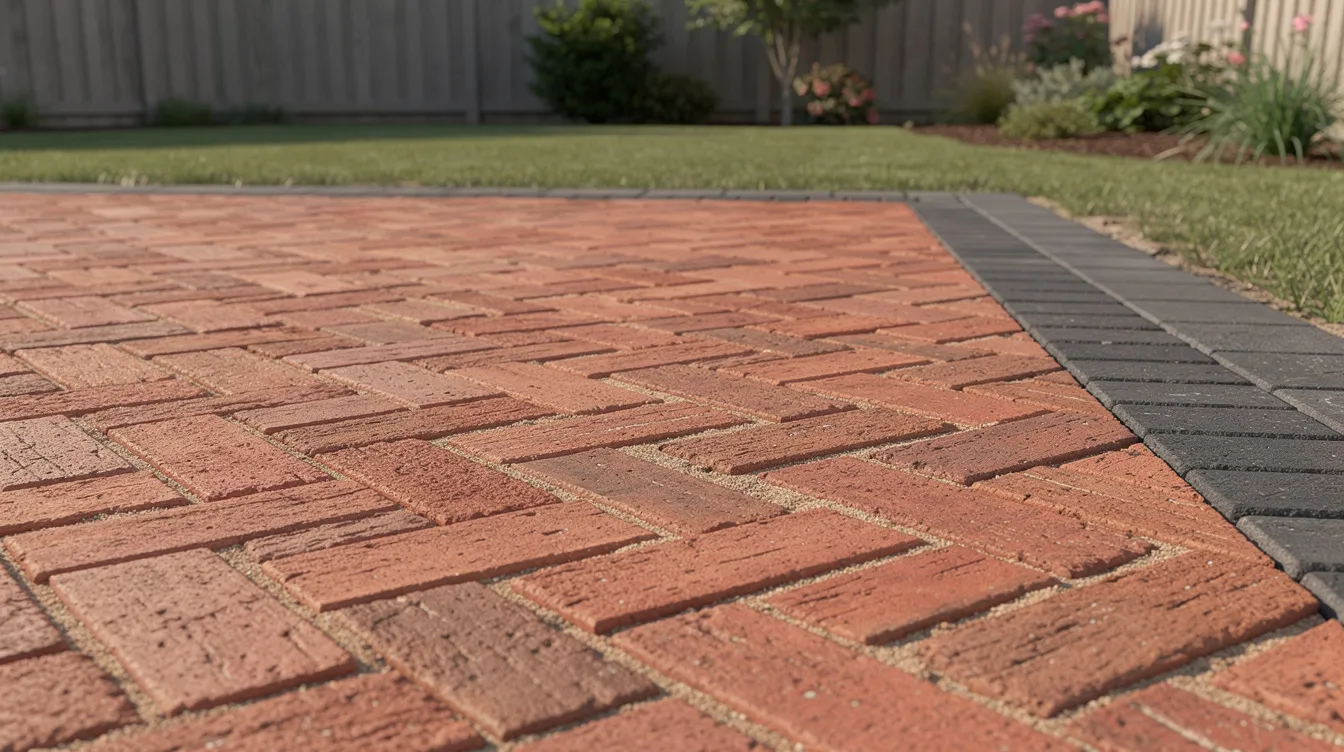
The herringbone pattern is a popular patio paving design that features pavers laid at 45 or 90-degree angles, creating a visually dynamic and stable surface.
The herringbone pattern features zigzag rows of rectangular pavers laid at 45° or 90° angles, similar to historic brick streets in East Coast cities. This V-shaped interlocking design allows pavers to fit together neatly and securely along edges with minimal cutting required.
This pattern is ideal for high-traffic patios and garden paths because it locks together strongly against New Jersey freeze-thaw movement. The interlocking geometry distributes weight effectively across the entire patio surface.
Consider warm red or brown brick-style pavers behind traditional homes in towns like Montclair, Maplewood, and Westfield for a classic look. Add contrasting colors in border pavers to create a striking contrast that frames the space.
Basketweave Patio Pattern
The basketweave pattern, resembling a woven basket, is created by alternating pavers in a perpendicular arrangement, making it a simple yet effective choice for patios.
Basketweave alternates pairs of horizontal and vertical rectangular pavers to mimic woven fabric, creating an old-world, cottage feel. This brick pattern adds natural beauty without overwhelming smaller garden spaces.
This pattern works particularly well for smaller patios (around 10×12 feet) off the back of 1950s and 1960s ranch homes common in Middlesex and Union counties. Classic clay or brick pavers in earthy reds and tans, framed with a single-color border course, simplify the design while maintaining rustic charm.
Running Bond (Brick) Patio Pattern
The running bond pattern is characterized by pavers laid in a linear fashion, resembling traditional brickwork, and is suitable for both straight and curved pathways.
Running bond uses offset rows of pavers, like traditional brick walls or sidewalks, offering clean lines and a familiar look. This pattern provides flexibility—pavers can be laid in various lengths and widths within rows.
It’s a strong choice for narrow patios and long walkways along driveways in towns like Clifton, Newark, and Elizabeth. Longer-format concrete pavers in grey or charcoal offer a slightly modern take that still feels classic.
Tip: Use the direction of rows to visually lengthen or widen smaller patio spaces. Rows running away from the house make space feel deeper, while horizontal rows make it feel wider.
Circular and Curved Patio Layouts
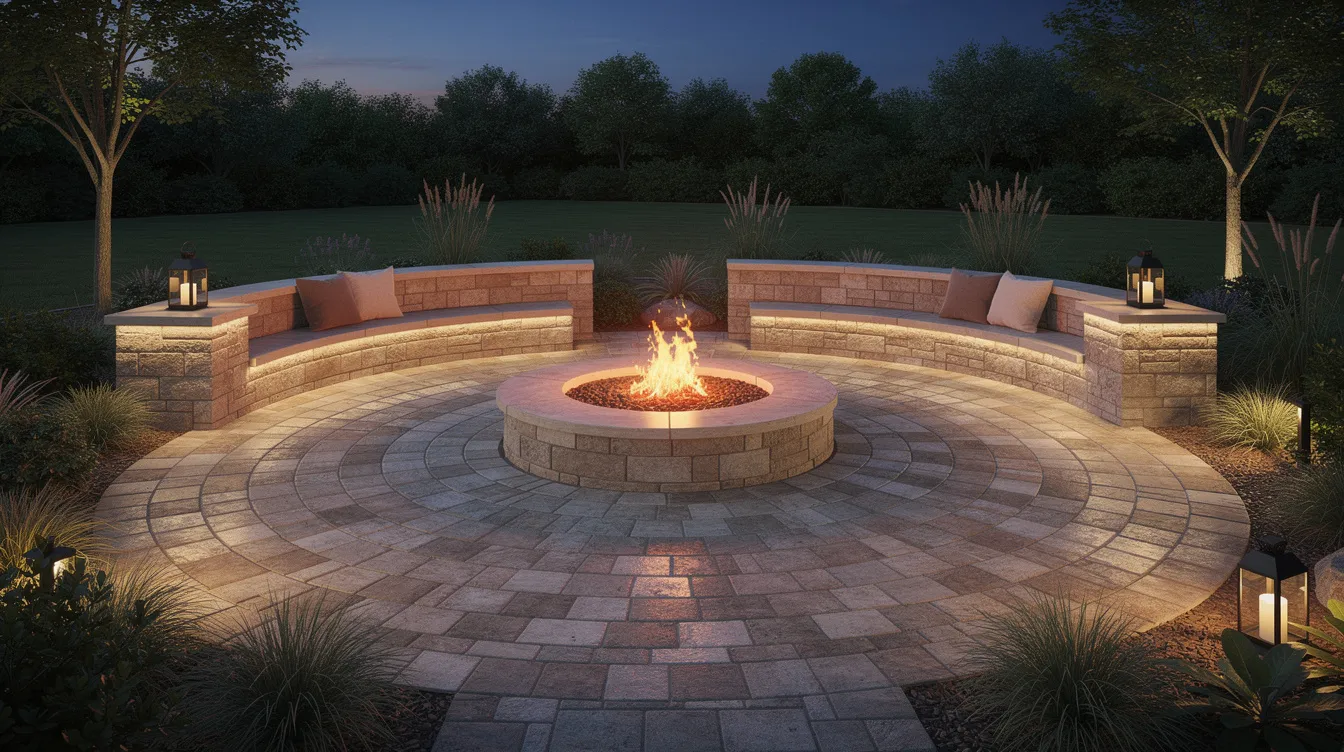
Circular patio paving patterns, also known as fan patterns, involve arranging pavers in a circular formation, which can serve as a focal point in outdoor spaces.
A circular layout creates natural gathering spots around fire pits, outdoor seating, or dining sets. This approach transforms your patio area into a focal point that draws family and guests together.
Fan-shaped or small-format pavers make smooth curves without awkward cuts—ideal for larger backyards in Morris or Somerset counties. A central circular pad (around 12 feet in diameter) can connect to a straight path leading back to the house with a different pattern.
Modern Patio Paving Ideas for Contemporary NJ Homes
Newer construction in counties like Monmouth, Ocean, and Bergen often suits sleek patio design styles. These layouts focus on crisp lines, large pavers, and restrained color palettes in greys, charcoals, and off-whites.
Many modern layouts pair well with updated siding, new roofing, and black-framed windows—services American Home Remodeling can coordinate as part of your project.
Popular Modern Patio Ideas:
- Large-Format Concrete Slab Patio
- Checkerboard Paver and Turf Design
- Sleek Linear Paving with Gravel Bands
- Monochrome Patio with Integrated Steps and Planter Walls
Large-Format Concrete Slab Patio
Large pavers in 24×24 inch or 24×36 inch sizes laid in a grid create a polished, geometric backyard terrace. This approach instantly elevate your outdoor area with minimal visual clutter.
Recommend this for level backyards behind newer colonials and townhomes in Jersey City, Bayonne, and Hoboken where space is limited but style matters. Consistent joint spacing, tight edges, and minimal color variation keep the design calm and contemporary.
Pair with black metal railings, cable rail, and simple outdoor sectionals for a cohesive modern aesthetic that complements your house exterior.
Checkerboard Paver and Turf Design
Alternating pavers with artificial turf or real grass creates a checkerboard look that feels modern and playful. Use 16×16 or 18×18 concrete pavers in light grey with deep green turf for high contrast.
This design is especially useful for tighter urban backyards in Hudson and Essex counties where drainage and low maintenance are priorities. The mix of materials adds texture while keeping the space practical.
Maintenance notes: Keep turf infill clean and edges trimmed seasonally. Consider pea gravel borders to create a seamless transition between different surfaces.
Sleek Linear Paving with Gravel Bands
Long rectangular pavers set in parallel rows with decorative gravel or black marble chips between them create strong linear visual interest. This design pairs well with modern horizontal siding and flat or low-slope roofing systems.
Use darker gravels for drama and light pavers for contrast, or vice versa, to suit your home’s exterior color scheme. This idea works particularly well for side yards or narrow patios where straight lines help spaces feel longer and more intentional.
Monochrome Patio with Integrated Steps and Planter Walls
Using one main color family (like cool grey) for pavers, step treads, and low retaining walls creates cohesive outdoor living. This approach works on sloped backyards in hilly areas like West Orange or Montclair to create split-level outdoor “rooms.”
Cap walls with smooth stone for easy seating and integrate LED step lighting for safety on summer evenings. American Home Remodeling can coordinate the masonry, drainage, and any related basement-entry or foundation work for these complex projects.
Natural Stone and Stone-Look Patio Ideas
Natural stone appeals to higher-end homes in Morris, Somerset, and Hunterdon counties. Homeowners can choose real stone like bluestone and flagstone, or stone-look concrete pavers that mimic the appearance at lower cost.
These options pair beautifully with upgraded roofing (architectural shingles or metal accents) and new stone veneer on your home’s facade. When installed with proper sand base and drainage, these materials age gracefully in NJ weather.
Bluestone Patios for Classic Northeast Style
Full-color bluestone in rectangular or random sizes, laid in tight patterns with small joints, delivers timeless elegance. This stone patio style suits historic properties and upscale neighborhoods in Short Hills, Summit, and Morristown.
Bluestone’s color deepens when wet after summer thunderstorms, adding dynamic character throughout seasons. Consider sealing options for enhanced slip-resistance. Pair with natural stone steps and matching bluestone caps on low seating walls for cohesive exterior design.
Flagstone-Style Freeform Patios
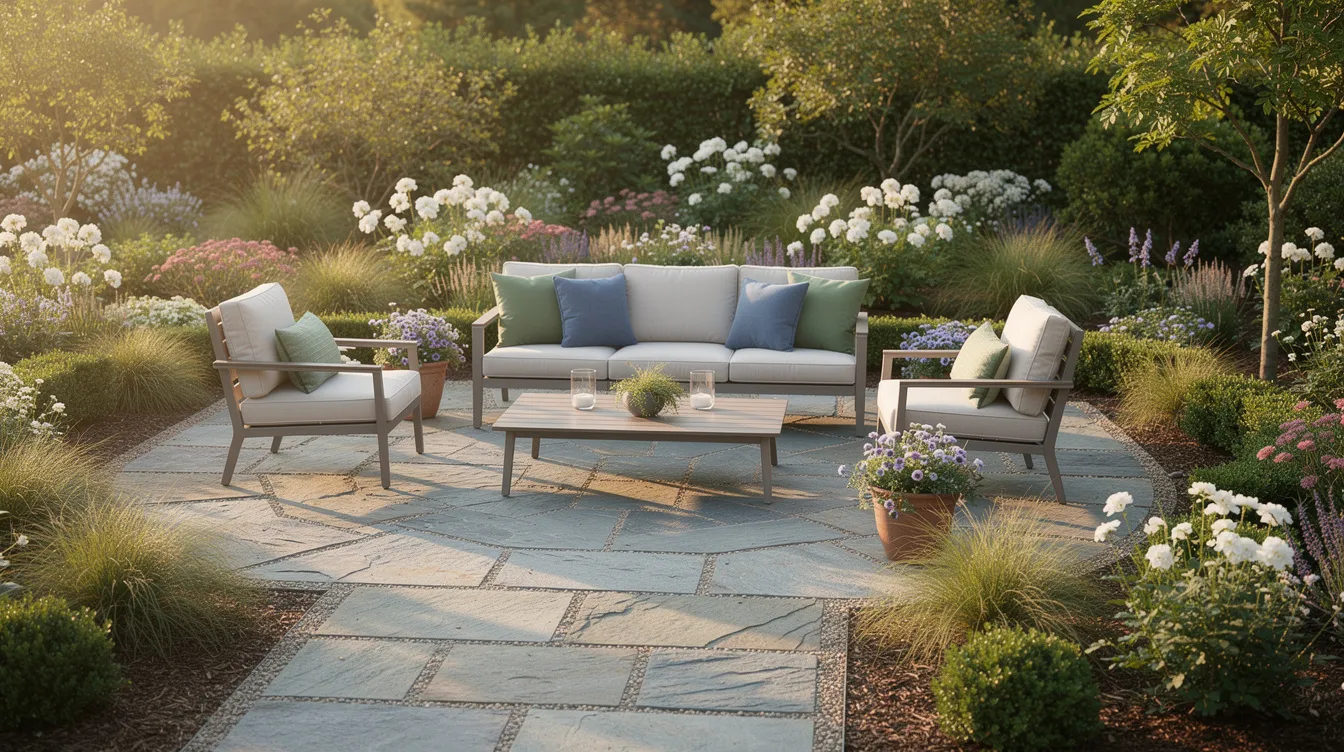
Irregular-shaped stones create organic, winding patio edges that feel relaxed and naturalistic. This style suits homes backing to woods or greenbelts in Sussex, Warren, and parts of Morris counties where a rustic feel fits the landscape.
Fill joints with polymeric sand, decorative gravel, or groundcover plantings like creeping thyme for softer edges. Consider positioning flagstone around a fire pit or under a pergola to create an outdoor oasis for relaxation.
Stone-Look Concrete Pavers as a Budget-Friendly Alternative
Concrete pavers molded and colored to resemble slate, travertine, or tumbled stone offer high-end looks without premium cost. This smart choice suits mid-range patio projects in Essex, Union, or Middlesex counties.
Mix multiple sizes in a modular pattern to avoid repetition and keep the look natural. These pavers are typically more consistent in thickness, making installation faster and more predictable in NJ’s variable soils—which can make all the difference in project timelines.
Creative Layout Ideas: Zones, Borders, and Multi-Level Patios
How your patio is laid out matters just as much as the paver material or pattern you select. Many homeowners are turning their backyards into multi-function outdoor living areas with cooking, dining, and lounge zones.
American Home Remodeling can design patios that tie into existing decks, basement walkouts, and home additions for cohesive functionality.
Creating Outdoor “Rooms” with Pavers and Planters
Use changes in paver pattern, color, or orientation to subtly define zones for dining, lounging, and grilling. Large planters, low masonry walls, or built-in benches serve as physical dividers without blocking light or airflow.
Sample layout: A 14×20 dining zone connected to a 12×14 lounge seating area separated by a planter row works well for medium-sized backyards in Livingston, Clark, and Cranford where families need flexible spaces.
Border Designs that Frame Your Patio
A contrasting border (one or two courses of a different paver) makes patios look finished and visually separates them from the lawn. Simple stretcher borders suit modern spaces while detailed patterns work for traditional homes.
Darker borders help hide minor edging stains and mower marks—useful for busy families. Match borders with existing driveway pavers or front walkways for a cohesive whole-house look.
Raised and Multi-Level Patios on Sloped Lots
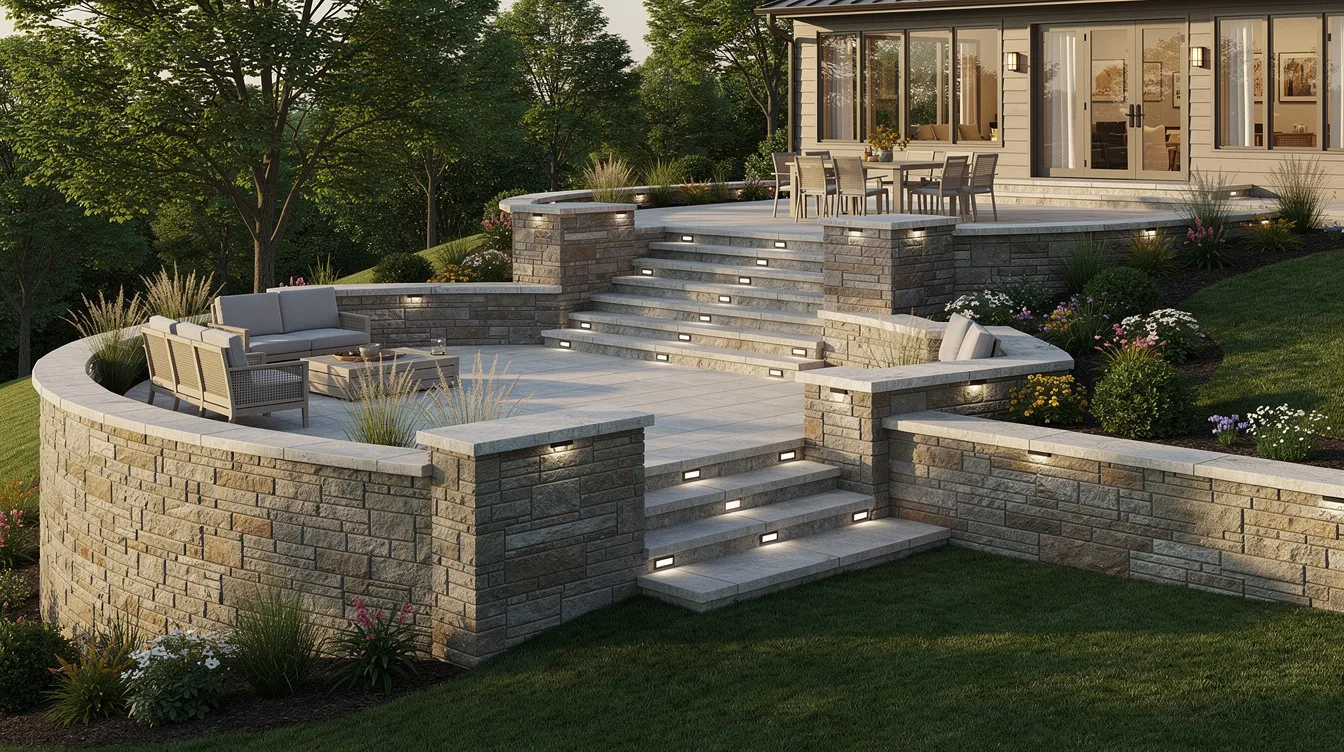
Steps, retaining walls, and terraced platforms can transform sloped yards common in parts of Essex and Passaic counties into usable entertaining spaces. A raised paver patio creates drama while solving grading challenges.
Use matching pavers on treads and patio surfaces, with textured wall block or stone veneer on risers for visual interest. Integrate railings, lighting, and drainage solutions to keep the space safe during heavy rain and winter melt.
Choosing Patio Paver Materials for New Jersey’s Climate
NJ’s freeze-thaw cycles, rain, and occasional snowstorms place real stress on patio materials. Proper base prep and drainage are as important as the paver selection itself for long-term durability.
American Home Remodeling uses materials suited to the region and installs them to manufacturer and local code standards.
| Material Type | Best For | Maintenance Level | Lifespan |
|---|---|---|---|
| Concrete Pavers | Most budgets | Low maintenance | 25-30 years |
| Clay/Brick Pavers | Traditional homes | Very low | 30+ years |
| Natural Stone | Premium projects | Medium | 40+ years |
| Porcelain Pavers | Pool areas, kitchens | Very low | 25-30 years |
Concrete Pavers
Concrete pavers are durable and cost-effective, making them a popular choice for patio and walkway projects.
Concrete pavers are versatile, widely available, and ideal for most budgets in NJ suburbs. They come in many shapes, colors, and textures—from smooth modern slabs to tumbled “antique” styles.
Benefits include easy replacement of individual units and good performance in freeze-thaw when installed on proper base with adequate drainage. Color can fade over decades in full sun, but sealing and careful color selection help maintain appearance.
Clay and Brick Pavers
Clay pavers are made from natural clay and are known for their warm colors and durability, making them suitable for traditional and rustic landscapes.
Brick pavers, made from baked clay, offer a classic and durable option for traditional landscapes, available in various colors and sizes.
Clay and traditional brick pavers provide warm, timeless tones that suit older neighborhoods and classic architecture. They’re very durable and hold their color well, though they offer fewer size options than concrete.
These work excellently for front walkways and small patios visible from the street in historic or established NJ neighborhoods. Slightly higher material cost is often offset by long-term appearance and low maintenance.
Natural Stone Pavers and Slabs
Natural stone pavers, such as flagstone, slate, and granite, are valued for their unique beauty and are often used in upscale landscape projects.
Natural stone—bluestone, flagstone, or granite—is the premium choice for homeowners seeking one-of-a-kind patios. Each stone has unique veining and color variation that adds character.
Installation requires skilled labor to handle weight, thickness variation, and proper joint spacing. Stone is excellent for luxury projects and can be coordinated with stone veneer, outdoor kitchens, and fireplaces.
Porcelain and Wood-Effect Pavers
Porcelain pavers are popular for their consistent color, high density, and resistance to stains and moisture.
Porcelain pavers can mimic wood, concrete, or stone while remaining dense, stain-resistant, and low maintenance. They’re ideal for patios around pools or outdoor kitchens where stain resistance matters.
Wood-effect porcelain offers a smart alternative to traditional decking—delivering that “plank” look without ongoing staining. Ensure products are rated for exterior use in four-season climates and check slip-resistance ratings.
Planning Your Patio Project with American Home Remodeling
Moving from inspiration to a real project requires working with a licensed NJ contractor who understands local conditions and codes.
American Home Remodeling is based in Irvington, NJ and serves multiple counties including Essex, Union, Bergen, Passaic, Morris, Middlesex, Hudson, and nearby areas like Staten Island, Rockland, and Westchester. The company can design patios that coordinate with roofing, siding, window replacements, home additions, and basement conversions.
Financing options include up to 100% financing for qualified customers and 0% interest plans for up to 18 months.
Step-by-Step Design and Build Process
The process flows from initial phone call or online inquiry through on-site consultation, design and material selection, detailed proposal, permitting if needed, and construction schedule.
Step-by-Step Process:
- Make an initial phone call or submit an online inquiry.
- Schedule and complete an on-site consultation.
- Select design and materials with expert guidance.
- Receive a detailed proposal and review project scope.
- Obtain permits if required by local codes.
- Finalize the construction schedule and begin work.
Bring photos of patios you like, plus information on how you use your yard—kids, pets, grilling, grill placement, parties. American Home Remodeling evaluates grading, drainage, and existing structures like decks or stoops before finalizing plans.
Timeline: Expect 1–3 weeks on-site for a typical backyard patio, depending on size and complexity. Get more inspiration by browsing completed projects during your consultation.
Coordinating Patio Work with Other Home Improvements
Aligning patio projects with roofing, siding, or addition work ensures all exterior colors and materials match. Examples include:
- Adding a paver patio at the same time as a kitchen remodel with new sliding doors
- Pairing a new rear addition with a multi-level patio and steps
- Coordinating masonry steps, retaining walls, and entryways for seamless transition between spaces
American Home Remodeling handles these integrated projects, ensuring your creativity in design translates to cohesive execution.
Budgeting and Financing Your Patio
Realistic budget ranges vary based on materials, access, and design complexity:
| Patio Size | Budget Range (Concrete Pavers) | Budget Range (Natural Stone) |
|---|---|---|
| Small (100-200 sq ft) | $3,000-$6,000 | $5,000-$10,000 |
| Medium (200-400 sq ft) | $6,000-$12,000 | $10,000-$20,000 |
| Large (400+ sq ft) | $12,000-$25,000 | $20,000-$40,000+ |
Financing through American Home Remodeling spreads costs over time, making it easier to choose higher-quality materials.
Consider long-term value: durability, reduced maintenance, and increased resale appeal in competitive NJ real estate markets.
Ready to start? Call 973-374-6700 or schedule a free consultation online to receive a tailored quote for your patio ideas.
Frequently Asked Questions About Patio Paving in New Jersey
How long does a professionally installed paver patio last in NJ?
With proper base preparation and drainage, most paver patios last 25–30 years or more in New Jersey’s climate. Individual pavers can be lifted and reset if settling occurs—an advantage over poured concrete slab installations. Simple maintenance includes periodic cleaning, joint sand replenishment, and sealing if desired.
Do I need a permit for a new patio in my New Jersey town?
Permit requirements vary by municipality and may depend on patio size, height, and whether retaining walls or roofed structures like a pergola are included. Many ground-level patios without roofs or tall walls don’t require full building permits, but zoning rules still apply. American Home Remodeling helps homeowners check local codes in Essex, Union, Bergen, and other counties before work begins.
What is the best time of year to install a patio in New Jersey?
Prime installation seasons are spring (April–June) and fall (September–November) when temperatures are moderate. Summer projects are common but may require careful scheduling around heat and thunderstorms. Book consultations early in the year to secure preferred installation dates before contractor calendars fill up.
Can a new paver patio be added to an existing concrete slab?
In some cases, pavers can be installed over structurally sound concrete using appropriate bonding or pedestal systems. The existing concrete patio must be stable, properly sloped away from the house, and free from major cracks or heaving. American Home Remodeling inspects existing concrete and recommends whether overlaying or full replacement makes more sense for your situation.
How do I choose a patio design that matches my home’s style?
Start with your home’s architecture and exterior colors, then choose paver styles and patterns that complement those elements. Classic brick or bluestone suits traditional colonials and Victorians, while large-format concrete or porcelain works for modern builds. American Home Remodeling’s design team brings samples to your home and creates layouts that work with existing siding, roofing, and trim—giving you design ideas tailored to your specific landscape.