

NJ Permit for Kitchen Remodel: What New Jersey Homeowners Need to Know
Key Takeaways
- In 2026, most New Jersey kitchen remodels that change electrical, plumbing, or structure require a permit under the NJ Uniform Construction Code (UCC).
- Cosmetic work like painting walls, flooring and tile updates, or swapping same-size appliances rarely needs a permit, but removing walls, moving outlets, or relocating plumbing almost always does.
- Permits are issued by your local Construction Code Enforcement Office, and required inspections happen before, during, and after work.
- Permit fees vary by municipality and project scope, ranging from a few hundred dollars to over a thousand.
- American Home Remodeling, based in Irvington, NJ, handles permit applications and inspections for homeowners throughout North, Central, and parts of South NJ, plus Staten Island, Rockland, and Westchester.
When Do You Need a Permit for a Kitchen Remodel in New Jersey?
New Jersey follows the Uniform Construction Code (NJAC 5:23), which sets statewide minimum standards enforced through local building departments. Under this code, “ordinary maintenance or repair” is exempt from permits—meaning non-structural, cosmetic changes that don’t alter building systems or layout. However, most system or layout changes require approval.
As of 2026, you generally need a permit when your kitchen renovation affects structure, plumbing, electrical, or mechanical systems. In New Jersey, a construction permit is typically required for significant kitchen renovations, including structural changes, electrical work, and plumbing modifications. Common examples that definitely require approval include:
- Removing a load bearing wall in a 1960s Cape Cod in Essex County
- Adding recessed lighting or new wiring in a Bergen County condo
- Relocating a sink location in a Union County colonial
Permit requirements can vary by municipality. Newark mandates permits for any electrical addition, Montclair requires engineered plans for wall removals in pre-1950 homes, and Hamilton Township uses tiered fee structures. Many municipalities interpret “minor” differently, so always confirm with your local building department before starting work—even for seemingly simple upgrades.
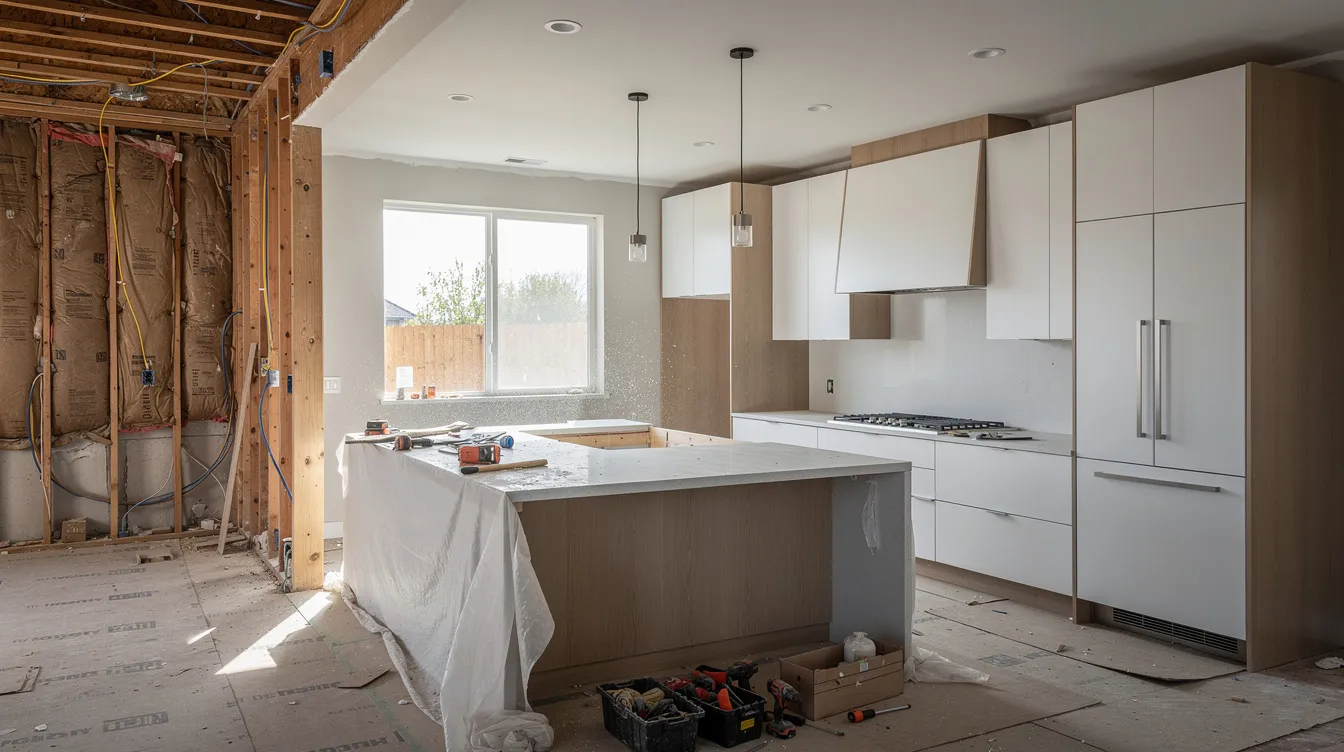
Projects That Require a Permit vs. Those That Usually Don’t
Understanding which projects need a permit saves NJ homeowners time and prevents costly fines. Here’s a practical breakdown:
Almost always needs a permit:
- Structural changes like removing walls, adding walls, creating new door or window openings, or enlarging your kitchen space footprint that may call for a skilled carpentry contractor in Sussex County, NJ
- Plumbing work including moving or adding plumbing connections for sinks, dishwashers, pot fillers, or new piping for refrigerators with water lines as part of a full kitchen remodeling project in Sussex County, NJ
- Adapting sewer lines or making plumbing modifications to drain configurations
- Electrical work such as installing new circuits, moving outlets, adding under-cabinet or recessed lighting, new lighting fixtures, or panel upgrades
- Installing new wiring for kitchen appliances requiring dedicated circuits
- Mechanical changes like ducted range hoods over 400 CFM requiring proper ventilation and make-up air systems, which often coincide with exterior upgrades such as professional siding installation and replacement
- Adding or enlarging exterior windows for natural light
Usually does not need a permit:
- Painting walls, ceilings, or kitchen cabinets in an existing Edison or Morristown home
- Replacing cabinet hardware, cabinet doors, or countertops when layout and utilities stay the same
- Swapping new appliances of the same type in the same location without new gas lines or electrical modifications
- Installing new flooring or backsplash tile updates that don’t disturb structural elements
Even when permits aren’t required, work must comply with local codes—such as GFCI placement for countertop outlets and vent clearances for range hoods. Local officials make the final call, so treat this guidance as a starting point, not a legal code book.
Types of NJ Permits Involved in a Kitchen Remodel
New Jersey uses a subcode system under the UCC, meaning a single kitchen remodel may trigger several permits issued together. Standard UCC forms include the Construction Permit Application and specific subcode forms for electrical, plumbing, and fire. Common types of permits required for kitchen remodeling in New Jersey include building permits for structural changes, electrical permits for wiring modifications, and plumbing permits for changes to water supply and drainage systems.
Building (Construction) Permit: Required for framing changes, new openings, structural headers, and any alteration affecting support or fire separation between your kitchen and adjoining rooms.
Electrical Permit: Needed for new circuits, relocation of outlets and switches, dedicated circuits for major appliances, and under-cabinet or recessed lighting compliant with NEC standards as adopted by NJ. Licensed electricians must provide their state license numbers and sign their respective permit applications.
Plumbing Permit: Required for moving drains, vents, or water supply lines, adding an island sink or new sink, installing a gas cooktop, or adding a built-in coffee station with a water line. Any electrical or plumbing alterations beyond like-for-like replacements trigger this requirement. Licensed plumbers must also provide their state license numbers.
Mechanical/Fire Subcode Permits: Mechanical permits are required for installing new ventilation systems, high-CFM vent hoods, ductwork, make-up air, or interconnected smoke/CO detectors near the kitchen.
Many towns like Livingston, Paramus, and Princeton accept combined applications with separate technical sections for each trade.
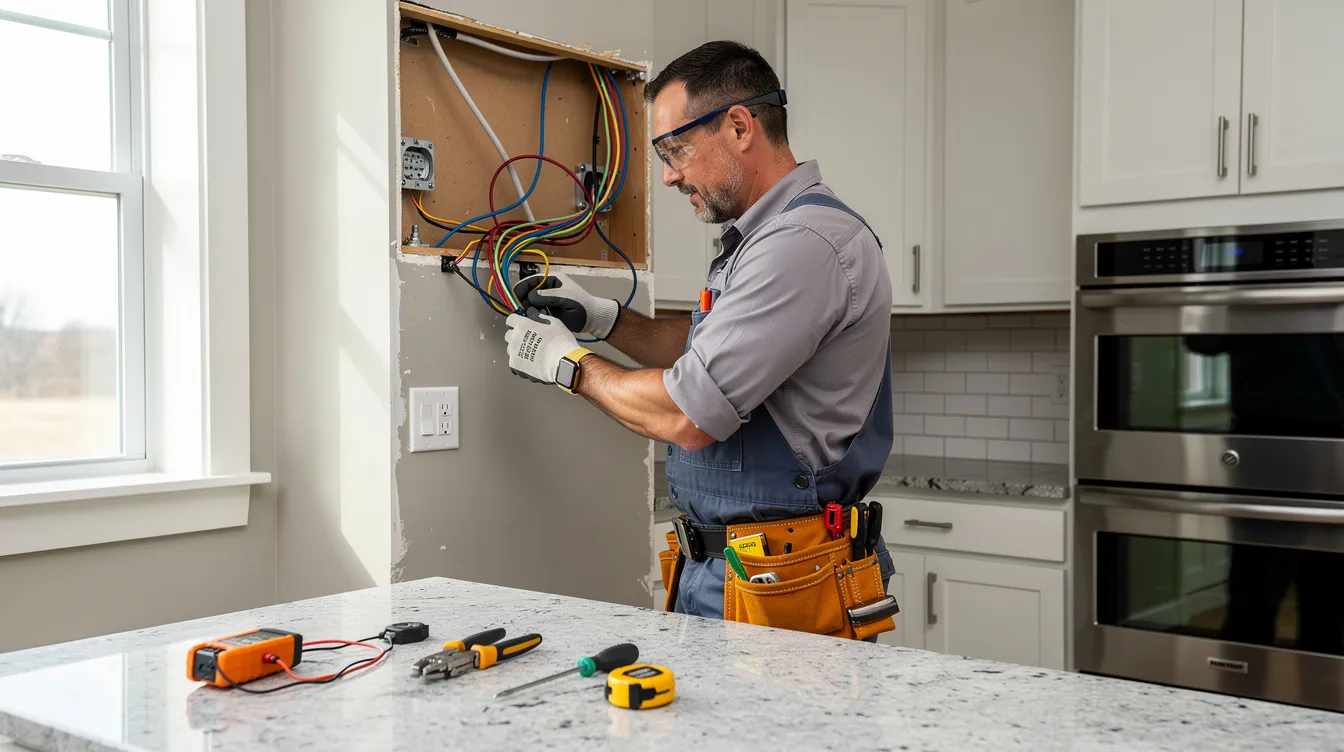
New Jersey Kitchen Code Basics: What Inspectors Look For
Permits trigger inspections, and NJ inspectors focus on life safety and long-term durability—not just aesthetics. Permits are essential for ensuring that kitchen renovations comply with New Jersey’s building codes, which are designed to protect the safety and structural integrity of homes. Major construction phases require inspections, including rough inspections before walls are closed and final inspections once the project is complete.
Electrical basics: Inspectors verify GFCI protection for all countertop receptacles within 6 feet of sinks and AFCI protection at panels for kitchen branch circuits. They check countertop outlet spacing (no more than 48 inches apart), dedicated circuits for dishwashers and microwaves, and proper illumination over work areas. This prevents electrical fires and ensures safety.
Plumbing basics: Rough inspections are completed before wiring or plumbing is covered by walls. Inspectors check trap seals, correct drain slope (1/4 inch per foot), shut-off valves within 5 feet of fixtures, water pressure requirements, and anti-scald protections. Any plumbing codes violations must be corrected before proceeding.
Structural basics: When removing walls or cutting joists for ductwork, inspectors verify load paths and beam sizing. In older NJ homes—like 1920s bungalows in Montclair or Maplewood—structural alterations require particular attention to structural integrity and load distribution.
Energy code: NJ’s adoption of current IECC/IRC standards with local amendments means insulation behind exterior kitchen walls (R-13 minimum), air sealing around new fixtures like windows or doors, and U-factor requirements for glazing.
American Home Remodeling designs kitchens with these code requirements built in, reducing rework during the inspection process, especially for Essex County kitchen and bath remodeling projects.
The NJ Kitchen Permit Application Process (Step-by-Step)
The permit process follows a clear timeline. In New Jersey, the permit application process for kitchen remodeling typically requires homeowners to submit detailed plans and necessary documentation to their local building department.
- Define scope and prepare documents: Start by creating scaled drawings (typically 1/4”=1’-0”) showing existing and proposed layouts. Construction plans must show existing and proposed layouts. A professional contractor or architect often prepares these.
- Obtain and complete forms: Download the Construction Permit Application and technical subcode sections from your town’s website or Construction Code office. This includes forms for building, electrical, plumbing, and fire as applicable.
- Submit application: Submit in person or online—many NJ municipalities now use electronic portals. Pay initial permit fees. Applications for permits must be filed at the municipal construction office, which has up to 20 business days to approve or deny requests.
- Plan review: The timeline for obtaining kitchen remodeling permits in New Jersey can vary significantly, taking anywhere from a few days to several weeks. Straightforward projects often clear in 7-10 business days; significant changes involving zoning take longer.
- Permits issued: Once approved, post permits visibly at the job site.
- Inspections: Schedule rough inspections for framing, electrical, and plumbing before insulation and drywall. Final inspections are conducted once the project is finished to ensure compliance with safety codes. A Certificate of Approval is issued after passing all inspections to close out the permit.
Any mid-project changes affecting layout, structure, or systems require submitting revised plans for amended approvals.
Risks of Skipping Permits for a New Jersey Kitchen Remodel
Many homeowners consider skipping the permit application process to save time or money. This creates serious consequences that far outweigh any perceived savings.
Legal and financial risks: Code enforcement can issue stop-work orders and fines up to $2,000 per violation under NJ UCC regulations. Failing to obtain the necessary permits for kitchen remodeling in New Jersey can result in fines, legal issues, and complications when selling the home, as unpermitted work may not comply with local building codes. A Bergen County condo owner was fined $2,500 for unpermitted recessed lighting that violated AFCI rules.
Resale complications: Title searches and home inspections in Morris, Essex, or Middlesex Counties frequently uncover unpermitted kitchen work from 2020-2025. This can delay closings by 30-90 days or kill deals entirely.
Insurance problems: Homeowner’s insurance may deny claims for kitchen fires or water damage linked to unpermitted electrical wiring or plumbing work.
Costly corrections: You may be forced to open finished walls or remove new cabinets and countertops to expose work for inspection—increasing costs 2-3x compared to proper permits from the start.
The cost of obtaining necessary permits correctly is almost always less than fixing unpermitted work later.
Who Pulls the Permit: Homeowner vs. Contractor in NJ
In New Jersey, permits may be obtained by an owner-occupant or a licensed contractor, but responsibilities differ significantly.
Homeowners may sign as the contractor if doing the work themselves on their primary residence. However, they assume full responsibility for local building codes compliance and scheduling inspections. Proof of ownership is required if a homeowner is pulling the permits themselves.
When a licensed contractor performs the work, best practice is having the contractor named on the permit with their NJ license and insurance details provided. This ensures accountability and proper coverage.
Non-occupying owners (landlords not living on-site) typically must use licensed professionals for most work, especially electrical and plumbing, per NJAC 5:23-6, and many choose Union County kitchen and bath remodeling specialists to manage code-heavy projects.
Never pull permits “for” an unlicensed contractor or handyman—this creates liability and insurance issues if something goes wrong during the renovation process.
Reputable firms like American Home Remodeling’s expert kitchen remodeling services in New Jersey always provide permit numbers and inspection sign-offs to clients for records and future resale documentation.
How American Home Remodeling Helps You Navigate NJ Kitchen Permits
We understand that navigating NJ building codes and kitchen remodeling permits can feel overwhelming. That’s why we handle the entire permit process for our clients.
American Home Remodeling is a licensed, insured general contractor based at 89-91 Coit Street, Irvington, NJ 07111. We serve homeowners across Essex, Union, Bergen, Morris, Passaic, Hudson, Middlesex, and surrounding counties, plus Staten Island, Rockland, and Westchester with expert home remodeling, roofing, and siding services in NJ.
What we handle for you:
- Assessing project scope and preparing or coordinating detailed plans
- Completing technical subcode applications for construction, electrical, plumbing, and mechanical work
- Submitting to local offices including Newark, Jersey City, Clifton, and Woodbridge
- Scheduling inspections and ensuring all required inspections pass
Hiring a professional contractor for kitchen remodeling can simplify the permit process, as they are familiar with local building codes and can manage the application and inspection processes efficiently. A licensed contractor can help ensure that all necessary permits are obtained, which is crucial for compliance with local regulations and to avoid potential fines or legal issues.
Our project managers stay current with 2024-2026 NJ code updates and local amendments, minimizing plan-review rejections. Working with a contractor can save homeowners time and reduce stress, as they handle the complexities of the permit application process and ensure that all work meets safety standards.
We integrate permit timing into your kitchen remodeling schedule so you know exactly when to expect start dates, inspections, and completion. We also offer financing options—up to 100% financing for qualified customers and 0% interest for up to 18 months—to help cover both construction and permit costs, which you can explore on our American Home Remodeling contact page.
Ready to start your NJ kitchen remodel the right way? Call us at 973-374-6700 or schedule a free in-home consultation to discuss your project and permit needs.

Frequently Asked Questions About NJ Permits for Kitchen Remodels
How far in advance should I apply for a kitchen remodel permit in NJ?
Start the permit process 4-8 weeks before your desired construction start date. This allows time for design, document preparation, plan review, and any revisions requested by your local Construction Code office. Some straightforward kitchen projects in towns like Bloomfield or Rahway may be approved in 1-2 weeks, but structural work or complex layouts take longer. American Home Remodeling builds this lead time into project planning so permits are in hand before demolition begins.
Do I need a permit to remodel a kitchen in a condo or co-op in New Jersey?
Yes, state and local permit rules still apply in condos and co-ops. Many associations in places like Jersey City, Hoboken, and Fort Lee have their own home renovation approval process on top of municipal permits. Condo boards often require approval, proof of permits, contractor insurance, and restricted work hours for noisy demolition. American Home Remodeling coordinates with building management to obtain required paperwork for both association and municipal compliance.
What if my previous kitchen remodel was done without permits in NJ?
Don’t ignore unpermitted work discovered in a home—especially before selling or starting new renovations. Many local building departments allow “as-built” permits, which involve inspections of existing work and possible corrections to bring it up to current code. American Home Remodeling can inspect your existing kitchen, identify likely code issues, and help plan a path to legalization with minimal disruption, offering comprehensive home remodeling services in Somerset County, NJ as well.
How much do kitchen remodel permits typically cost in New Jersey?
Permit costs for kitchen remodeling in New Jersey depend on the scope of the project and the local municipality’s fee structure, which can vary widely. Expect a few hundred dollars for modest, non-structural updates in smaller towns, up to over $1,000 for large structural remodels in higher-fee municipalities. American Home Remodeling provides line-item estimates including anticipated permit fees during the proposal stage so you can budget accurately.
Can I live in my home while my permitted kitchen remodel is underway?
In most New Jersey projects, homeowners can stay home, but you may be without a functioning kitchen for several weeks during demolition, rough-in, and inspections. Local codes require safe access, working smoke and CO detectors, and proper dust control. American Home Remodeling often helps clients set up temporary kitchen spaces in a dining room or basement to make the renovation process more manageable.