

Ideas for Basement Finishing in NJ: From Dark Storage to Dream Space
Key Takeaways
- Finishing your New Jersey basement can add 600–1,200+ square feet of livable space at a lower cost per square foot than building an addition, while boosting resale value by 10–20% in competitive NJ markets.
- Before any finishing work begins, address NJ-specific challenges like moisture control, proper insulation (R-10 minimum per code), and code-compliant egress windows for bedrooms.
- Popular ideas for basement finishing in NJ include entertainment hubs with wet bars, dedicated home theaters, multi-use family rooms, guest suites with bathrooms, home offices, gyms, and hobby studios.
- Working with licensed NJ basement contractors like American Home Remodeling ensures your project meets local codes, passes inspections, and creates a space that feels like a natural extension of your main level.
- To get started, call 973-374-6700 or visit americanhomeremodeling.com for a free basement renovation consultation.
Why Finish Your New Jersey Basement?
If you walk down the stairs of most homes in Essex, Morris, Union, or Bergen Counties, you’ll find hundreds of square feet sitting unused. Maybe it’s a damp concrete floor surrounded by exposed framing, storage boxes stacked against the wall, and a single bare bulb providing light. That unfinished basement represents untapped potential—space that could transform how your family lives.
Finishing a basement can add 600–1,200+ square feet of functional living area for significantly less than building a home addition in NJ. The renovation process typically costs less per square foot because the foundation, walls, and roof already exist. You’re essentially creating an extra room (or several) within your home’s existing footprint. For NJ homeowners dealing with tight lots and high construction costs, that math makes sense.
What drives most NJ basement remodeling projects? Families need more room for teens who want their own space. Multi-generational households are growing, with 20% of NJ families now sharing homes with aging parents. Remote and hybrid work remains common in NYC-commuter areas, creating demand for quiet home offices away from the main level. And everyone, it seems, wants an entertainment hub for football Sundays and movie nights with friends.
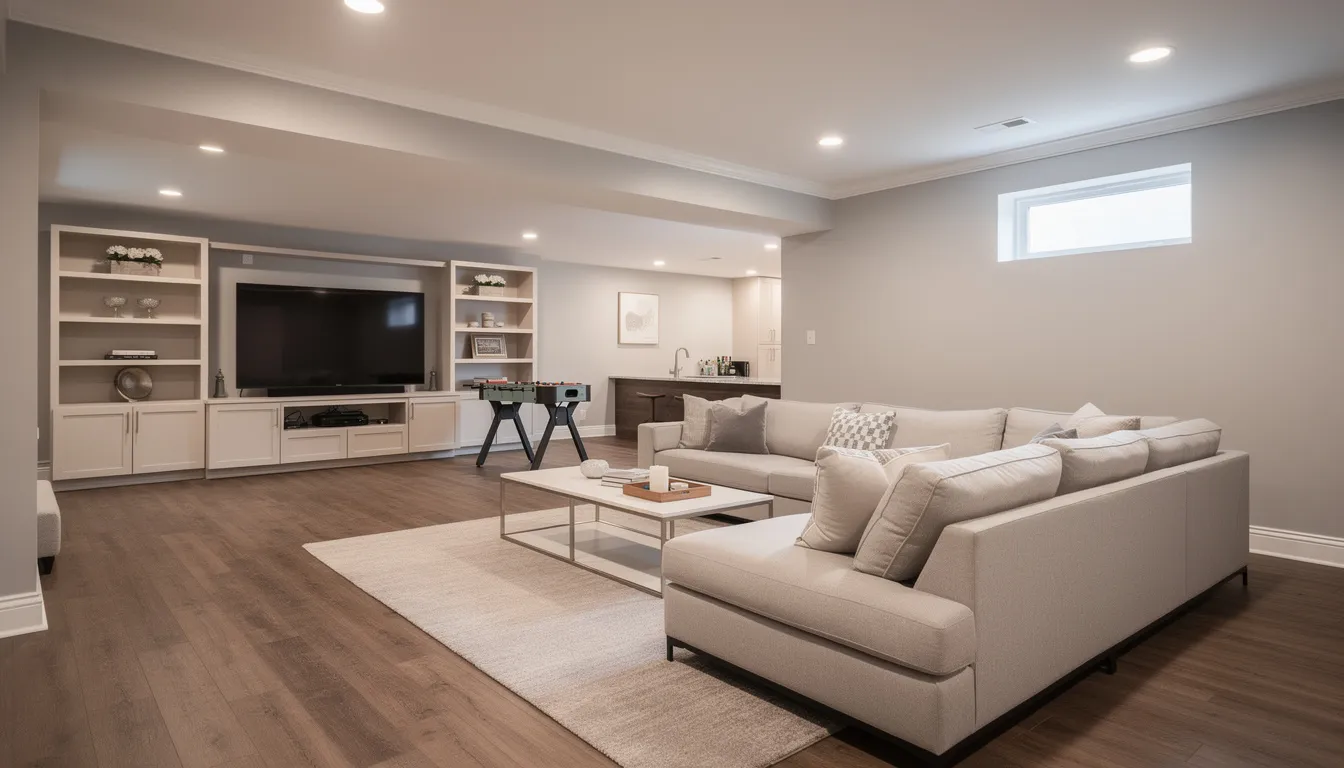
For example, a finished basement can be transformed into a cozy family lounge with a home theater setup, a playroom for kids, or even a private gym—showing just how versatile basement finishing ideas can be.
American Home Remodeling is a New Jersey-based remodeling contractor experienced with local codes, older foundations, and moisture-prone basements common throughout the state. The team handles everything from initial design and permits to framing, electrical work, plumbing, insulation, and final finishes—delivering NJ finished basements that feel like intentional living spaces rather than afterthoughts.
Step One: Plan Your NJ Basement Finishing Project Smartly
Every successful basement remodel starts with smart planning. Before you dive into Pinterest boards and flooring samples, you need to understand what you’re working with and what you hope to create.
Here’s how to approach early planning decisions for your NJ basement:
- Measure the full space, including ceiling height from concrete floor to the underside of joists (7–8 feet is typical in older NJ homes), location of existing windows, and positions of the boiler, water heater, and sump pump
- Check NJ building code requirements: minimum ceiling heights for habitable rooms, egress window dimensions (at least 20 inches wide by 24 inches high with a maximum 44-inch sill height) for bedrooms, and smoke/CO detector placement
- Define your primary purpose before construction—is this primarily an entertainment space, guest suite, home office, gym, playroom, or combination?
- Consider allocation: many homeowners dedicate 70% to finished living space and reserve 30% for storage and mechanical access
- Sketch zones on paper: TV area, bar or kitchenette, bathroom placement, play area, gym corner, and clear circulation paths from the stairs to any exits
- Think about the future—will your needs change in five or ten years? A flexible floor plan accommodates life changes better than a highly specialized layout
American Home Remodeling can create a 3D layout so you can see furniture placement, traffic flow, and storage solutions before construction begins. This step helps avoid costly mid-project changes and ensures the finished space works for your household.
Assessing Your Basement Space: Evaluating Potential and Challenges
Measuring and Identifying Obstacles
Before you dive into your basement remodel, take time to thoroughly assess your basement space to understand both its potential and its challenges. Start by measuring the dimensions of the room and noting the ceiling height, as this will influence what you can create in the space.
Look for any obstacles such as support columns, uneven flooring, or low-hanging pipes that could impact your renovation process.
Lighting and Moisture Considerations
Lighting is another key factor—basements often lack natural light, so consider how you’ll use artificial lighting to brighten the space and make it feel welcoming.
Check for any signs of moisture, such as damp spots, musty odors, or visible water stains. Addressing moisture early is crucial; you may need to seal walls or floors to prevent future issues and ensure your finished basement remains functional and comfortable.
By carefully evaluating your basement’s unique characteristics, you’ll be able to plan a renovation that transforms it into a functional, inviting space that adds real value to your home.
Address NJ Basement Challenges First: Moisture, Insulation & Codes
Moisture Control
New Jersey’s climate and geology create specific challenges that must be addressed before installing a single piece of drywall. Skip this step, and you risk mold growth, structural decay, and a finished basement that smells damp within months.
Many New Jersey basements—especially in homes built between 1950 and 1980—struggle with high humidity and seasonal seepage. The state’s clay-heavy soils retain water, and nor’easters dump significant rainfall that can overwhelm aging drainage systems. Superstorm Sandy in 2012 reminded many NJ homeowners just how vulnerable below-grade spaces can be, particularly in areas like Sussex County basement remodel projects where waterproofing and moisture control are critical.
Here’s the correct approach to preparing your basement:
- Inspect for water intrusion signs: efflorescence (white mineral deposits on walls), cracks wider than 1/8 inch, or musty odors
- Address drainage issues before finishing: consider French drains or interior perimeter drains, properly sized sump pumps with battery backups, and exterior grading improvements
- Seal masonry block walls with hydraulic cement for cracks and masonry sealer to prevent moisture penetration
- Install a dehumidifier sized for your square footage—basements should maintain 40–50% relative humidity to prevent mold
Insulation Choices
- Use rigid foam insulation on exterior walls (R-10 minimum per NJ energy codes) rather than fiberglass batts, which lose up to 50% of their R-value when damp
- Insulate rim joists and consider sound-attenuating insulation in the ceiling to cut noise from the main level
Insulation options include fiberglass batts, spray foam, or rigid foam boards to regulate temperature and provide a sound barrier.
Code Compliance
- Specify mold- and moisture-resistant drywall (green board or purple board) and pressure-treated bottom plates where wood touches concrete. All exposed surfaces, such as drywall, cabinets, and beams, should be properly covered to prevent moisture infiltration and damage.
Permitting matters in NJ. Electrical work, new bathrooms, and structural changes require permits from your local building department. Working without permits creates problems during resale, insurance claims, and future renovations. American Home Remodeling manages permits and schedules all required inspections, ensuring every basement renovation NJ project meets or exceeds New Jersey Residential Code.
Designing the Layout: Making the Most of Your Basement’s Footprint
Defining Zones and Flow
A well-designed layout is the foundation of any successful basement remodel. Start by defining how you want to use the space—do you envision a playroom for the kids, a home office, a wet bar for entertaining, or perhaps a combination of several rooms? Map out zones for each function, keeping in mind the flow between areas and how people will move through the space from the stairs to different rooms.
Working with Existing Features
Take note of the location of existing features like windows, doors, and plumbing lines, as these will influence where you can place a bathroom, bar, or other amenities. Ceiling height is another important consideration, especially if you plan to add a drop ceiling or need to work around ductwork. Don’t forget to factor in the placement of a wet bar or bathroom, as these require access to plumbing and may impact your overall design.
Visualizing Your Layout
Using online design tools or working with a professional can help you visualize your ideas and create a layout that maximizes every inch of your basement. With thoughtful planning, you can create a space that’s both functional and stylish, tailored to your family’s needs.
Idea 1: Create an Entertainment Hub with Bar and Media Room
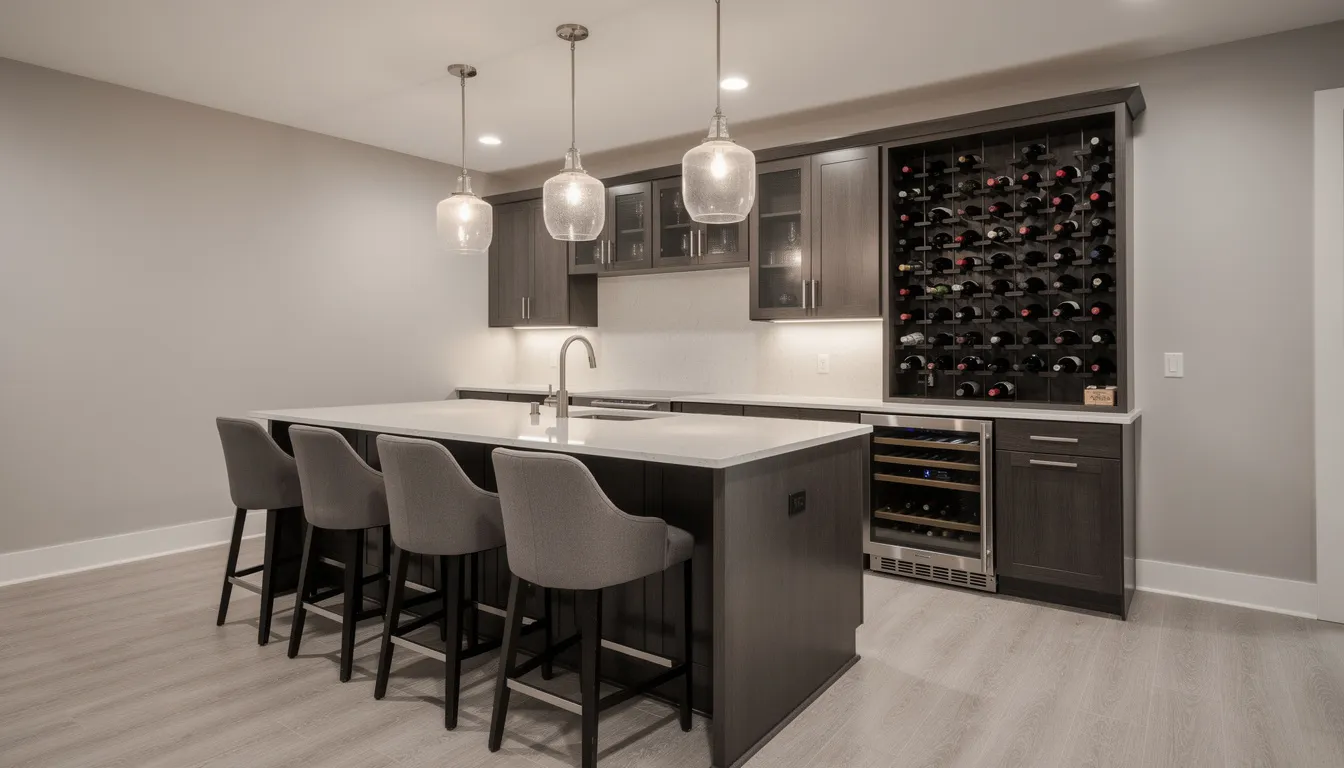
Picture this: an 800-square-foot space in Maplewood where friends gather around a walk-behind wet bar, grab cold drinks from the built-in beverage fridge, and settle into deep sectional seating to watch the big game on a 70-inch TV. The lighting dims with a single switch, and suddenly your basement feels like the best sports bar in town—except you own it.
An entertainment-focused basement remodel remains one of the most popular ideas for basement finishing in NJ. It combines the social appeal of a bar with the comfort of a dedicated media room, creating a space the whole community of family and friends wants to spend time in.
Key elements for your entertainment hub:
- Position a bar or kitchenette along one wall with durable materials: quartz countertops, LVP flooring (waterproof and scratch-resistant), closed cabinets for supplies, and open shelves for glassware display
- Choose your bar style: a walk-behind wet bar with sink and under-counter ice maker if plumbing allows, or a dry bar with wine fridge and wall-mounted shelves if budget or pipe access is limited
- Install dimmable recessed lighting throughout, wall sconces behind the bar for ambiance, and LED strips under floating shelves to add drama
- Create a defined media zone with a feature wall—shiplap, built-in media cabinet, or a painted accent in a deep color all work
- Run surround-sound wiring through walls during framing so cables stay hidden and the room looks polished
- Include comfortable seating with stain-resistant fabric, cup holders, and enough spots for your typical crowd
American Home Remodeling can design custom bar cabinetry, walk-in wine niches, or built-in banquettes tailored to your exact basement footprint. The goal is a space that feels intentional and high-end, not like an afterthought squeezed into leftover square footage.
Idea 2: NJ Basement Home Theater for Movie Nights & Game Days
If you want the full cinematic experience without leaving your house, a dedicated basement theater might be the right place for your investment. Dark, quiet, and completely customizable, a basement offers ideal conditions for home theaters that simply can’t happen on the main level.
Imagine a 16-foot by 22-foot theater in a Westfield home: tiered seating so everyone has an unobstructed view, blackout shades covering any window wells, and 7.1 surround sound that makes action movies come alive. This isn’t a TV area with a couch—it’s a genuine theater experience.
Here’s how to plan your basement theater:
- Locate it in the quietest back corner of the basement, away from mechanical noise and stair traffic
- Choose your display: a large wall-mounted 4K TV works for smaller rooms, while a ceiling-mounted projector with a fixed-frame screen creates the true theater vibe (requires lower ambient light and adequate throw distance)
- Address acoustics seriously: sound-dampening insulation in walls and ceiling, fabric-wrapped acoustic panels, and soft furnishings like carpet or plush rugs minimize echo and keep sound where it belongs
- Select dark wall colors with low-maintenance finishes—deep navy, charcoal, or even black for dedicated theaters
- Add safety features: step lights or LED strip lighting along risers prevent stumbles in the dark
- Include a snack bar zone with microwave, mini-fridge, and built-in cabinetry for media storage
- Plan cable management during framing so equipment connections stay hidden
The fun of building a theater is creating an experience you can’t get anywhere else. When you hang the first movie poster and break out the popcorn, you’ll understand why this idea inspires so many NJ homeowners.
Idea 3: Multi-Use Family Room, Playroom & Teen Hangout
Families with kids of different ages face a challenge: how do you create a space that works for a five-year-old and a fifteen-year-old? The answer is thoughtful zoning within a single open basement.
Define distinct zones in the basement using furniture, rugs, or bookshelves to visually separate areas for different activities.
Visual division works better than actual walls. On one side, place a soft area rug, toy storage in labeled bins, and a play table where younger kids can spread out with games and craft supplies. On the other side, create a lounge with a TV, gaming console, and beanbags or oversized floor pillows where teens can hang out with friends away from parental supervision (but not too far).
Here’s how to make a multi-use family basement work:
- Build in storage: wall-to-wall cabinets with labeled bins for toys, board games, and art supplies keep clutter under control and make cleanup fast
- Choose durable, easy-to-clean finishes: LVP flooring handles spills and dropped crayons, scrubbable paint survives fingerprints, and sturdy furniture can take daily use
- Add a small homework or craft table under the stairs or along a wall with cork boards for displaying projects
- Include a closet or built-in cubbies for coats, sports equipment, and backpacks
- Address safety: soft corners on furniture, protected electrical outlets, stair gates if needed for young children, and adequate general lighting
Don’t forget sound—if teens are playing video games while parents watch TV upstairs, insulation in the ceiling makes everyone happier.
American Home Remodeling can build custom cubbies, reading nooks, and under-stair playhouses tailored to your family’s needs. The best experience happens when the space grows with your kids.
Idea 4: Guest Suite or In-Law Space with Bedroom & Bath
Multi-generational living is growing across the country, with 20% of NJ households now including extended family. A finished basement with a proper bedroom and bath can provide the privacy and comfort that makes these arrangements work.
Here’s the critical point: for a basement bedroom to be legal in New Jersey, it must have proper ceiling height, an egress window or door to the outside, and a closet. This isn’t optional—it’s code, and it affects both safety and resale value.
Planning your basement guest suite:
- Locate the bedroom on the side with exterior wall access, allowing installation of a full-size egress window well if one doesn’t already exist
- Add a full bathroom or at least a 3/4 bath (shower, toilet, sink) adjacent to the bedroom for true independence
- Choose warm paint colors and layered lighting (overhead, bedside, closet) to counter the basement’s naturally cold and dark tendencies
- Install sound insulation in walls and ceiling for privacy—nobody wants to hear every footstep from the main level
- Consider comfort extras for aging relatives: radiant floor heating in the bathroom adds warmth underfoot, grab bars near the toilet and shower improve safety, and low-threshold showers eliminate tripping hazards
- Include storage: a walk-in closet or built-in wardrobes with drawers save space and reduce the need for additional furniture
American Home Remodeling regularly designs NJ finished basements that function as mini-apartments, including code-compliant plumbing, ventilation, and egress. The hope is that your guests—or your parents—feel completely at home.
Idea 5: Home Office & Hybrid Work Zone in the Basement
Remote and hybrid work remains a reality for roughly 45% of New Jersey’s workforce in 2026, especially in communities where residents commute to NYC. A basement home office offers something the dining room table can’t: separation from household chaos and a door you can close.
The challenge with basement offices is avoiding the isolated, dungeon-like feeling that makes remote work depressing. Here’s how to create an inspiring workspace:
- Position the desk near a window or at least near the stairwell to capture whatever natural light exists
- Build in a custom desk along one wall with drawers, file storage, and upper shelves to keep surfaces clear
- Plan electrical carefully: extra outlets, dedicated circuits for computers and printers, and hardwired Ethernet for stable video calls (Wi-Fi through a concrete floor can be unreliable)
- Address sound control with a solid-core office door and insulated walls so calls aren’t disrupted by kids or TV noise from upstairs
- Add proper task lighting—recessed cans plus a desk lamp reduce eye strain during long work sessions
- Consider multi-functional design: a murphy bed or sleeper sofa lets the office double as a guest room when needed
Discover how a well-designed basement office can actually improve your productivity compared to makeshift setups elsewhere in the house. American Home Remodeling can integrate office wiring, recessed task lighting, and custom built-ins into broader NJ basement remodeling plans.
Idea 6: Basement Home Gym or Wellness Retreat
Gym memberships are expensive, crowded, and require commuting. A basement home gym eliminates all three problems, putting fitness resources steps from your living space.
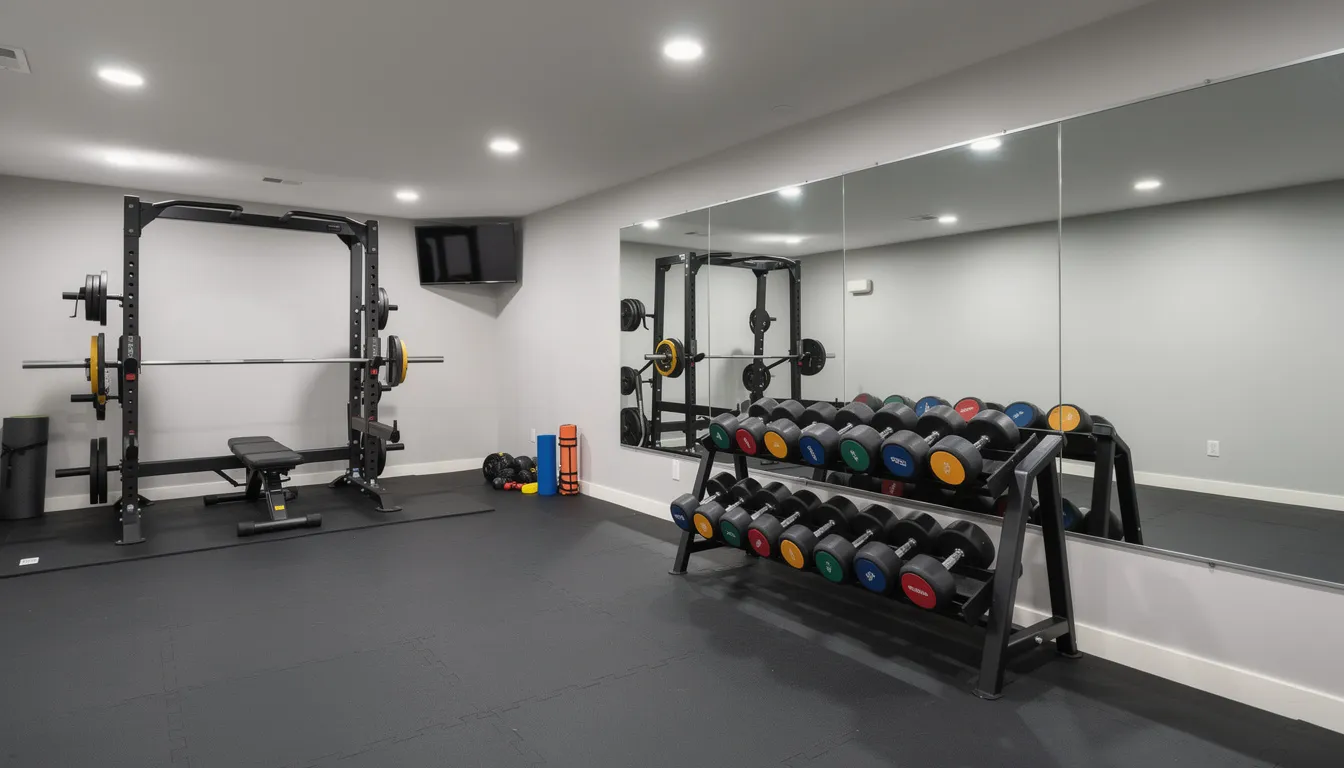
Picture a 350-square-foot fitness zone: rubber flooring absorbs impact and protects the concrete floor, a mirrored wall makes the room feel larger while letting you check your form, and a wall-mounted TV keeps you entertained during cardio sessions. Storage benches hold towels, resistance bands, and yoga gear.
Building your basement gym:
- Install moisture-resistant flooring that can handle sweat and dropped weights: rubber tiles (3/8-inch thick minimum) or commercial-grade LVP both work well
- Add a mirrored wall to expand perceived space and reflect light—even partial mirrors behind your lifting area help
- Plan climate control: ceiling fans, a mini-split AC unit, or at minimum, a high-quality dehumidifier keep the space comfortable during intense workouts
- Zone the room: cardio machines on one side, strength-training area with rack and bench in another, and a mat zone for stretching or yoga
- Include entertainment: Bluetooth speakers, a mounted TV, and adequate outlets for treadmills and bikes
- Mount hooks or pegboards for resistance bands, jump ropes, and yoga straps
American Home Remodeling can reinforce flooring where heavy equipment is planned and coordinate electrical outlets to handle treadmills, bikes, and sound systems without overloading circuits. If your renovation also involves exterior upgrades, their expertise as an NJ roof replacement contractor can help protect your newly finished space from water intrusion above.
Idea 7: Hobby Studio, Workshop, or Creative Space
Every household has hobbies that get squeezed into corners of the dining room, garage, or spare bedroom. A basement can provide dedicated space where you don’t have to clean up your project every time company comes over.
Real-world examples of hobby basements in NJ:
- A craft studio in Montclair with a built-in worktable, pegboard for tools and supplies, and deep shelving for fabric and paper storage
- A guitar practice room in Clifton with soundproofing panels, acoustic treatment, and a small recording setup
- A woodworking corner in Summit with dust collection, dedicated electrical circuits for power tools, and durable wood work surfaces
For more inspiration, check out our recent post detailing the Montclair craft studio project and how it was transformed into a creative haven.
Here’s how to plan your creative space:
- Install ample task lighting—LED shop lights or adjustable track lighting work better than standard recessed cans for detailed work
- Choose durable work surfaces: butcher block for woodworking, laminate for crafts, or stainless steel for metalwork
- Add wall-mounted storage systems (pegboard, French cleats, or custom cabinets) tailored to your specific hobby
- Use washable flooring near work zones to handle spills, paint, or sawdust—epoxy-coated concrete or commercial LVP clean up easily
- Address sound if your hobby is noisy: insulated interior walls, acoustic panels, and solid doors keep the noise contained
American Home Remodeling can design custom cabinetry, proper venting for fumes or dust, and dedicated circuits for specialized equipment. They also enhance exteriors as an NJ siding installation contractor, ensuring your creative space sits within a well-protected, energy-efficient envelope. Your inspired hobby deserves more than a folding table in the corner.
Choosing Flooring Options for NJ Basements
Selecting the right flooring is essential for any NJ basement remodel, as the space is often subject to moisture and temperature fluctuations.
| Flooring Type | Best For | Cost Range | Moisture Resistance | Pros | Cons |
|---|---|---|---|---|---|
| Luxury Vinyl Plank (LVP) | Most basements | $2–7/sq ft | Excellent | - Waterproof<br>- Durable<br>- Easy to clean | - Can feel less warm than carpet |
| Ceramic Tile | Bathrooms, bars, gym | $3–15/sq ft | Excellent | - Water-resistant<br>- Easy to clean<br>- Many styles | - Cold underfoot<br>- Hard surface |
| Engineered Wood | Dry basements only | $6–12/sq ft | Moderate | - Warm look<br>- Softer feel | - Not for damp areas |
| Carpet | Bedrooms, theaters | $3–8/sq ft | Poor (needs waterproof pad) | - Warm and soft<br>- | - Prone to moisture/mold |
| Polished Concrete | Industrial style | $8–12/sq ft | Excellent | - Modern look<br>- Low maintenance<br>- Durable | - Hard surface<br>- Can be cold |
Concrete flooring is a popular choice for its durability and versatility—it can be stained, painted, or polished to create a modern, low-maintenance look. If you prefer a warmer feel, luxury vinyl tile or plank is an excellent option, offering the appearance of wood or stone while standing up to damp conditions.
Ceramic tile and natural stone are also great choices for areas like bathrooms or wet bars, as they resist moisture and are easy to clean. When choosing your flooring, consider the style you want to create, your budget, and how much maintenance you’re willing to do. Always check that your flooring choice meets local codes and is suitable for below-grade installation.
By choosing the right flooring, you’ll create a basement space that’s comfortable, stylish, and built to last—no matter how you plan to use the room.
Working with a Concrete Floor: Solutions for Comfort and Style
If your basement has a concrete floor, you have a solid foundation for a variety of stylish and functional finishes. Staining or painting the concrete can instantly update the look, giving your space a unique, modern vibe that’s easy to maintain.
To add warmth and comfort, consider layering area rugs or mats in key zones, such as under a seating area or in a playroom.
For even more comfort, you can install a floating floor system—laminate or engineered wood are both excellent choices that provide a softer, warmer surface underfoot. Adding a subfloor or underlayment can help insulate the room, reduce noise, and make the space feel more like the main level of your house.
Don’t forget to plan your lighting and furniture layout to enhance the overall atmosphere and functionality of the room.
By embracing your concrete floor and choosing the right treatments, you can create a basement that’s not only functional and comfortable but also a true extension of your home’s style.
Design Details That Make NJ Finished Basements Feel Like Main-Level Rooms
The difference between a basement that feels like a basement and one that feels like intentional living space comes down to finishes and details. Here’s how to get it right.
Flooring choices:
| Flooring Type | Best For | Cost Range | Moisture Resistance |
|---|---|---|---|
| Luxury Vinyl Plank (LVP) | Most basements | $2–7/sq ft | Excellent |
| Ceramic Tile | Bathrooms, bars, gyms | $3–15/sq ft | Excellent |
| Engineered Wood | Dry basements only | $6–12/sq ft | Moderate |
| Carpet | Bedrooms, theaters | $3–8/sq ft | Poor (needs waterproof pad) |
| Polished Concrete | Industrial style | $8–12/sq ft | Excellent |
Lighting strategies:
- Recessed cans provide general illumination (plan for 500–700 lumens per 100 square feet)
- Wall sconces add warmth and mood, especially in bar areas and bedrooms
- Under-cabinet lights work for bars and workspaces
- Pendants over islands, game tables, or bar seating create focal points
- LED strips under floating shelves or along ceiling perimeters add drama without bulk
Layer lighting by combining ambient, task, and accent lighting to eliminate dark corners and create a cozy atmosphere.
Paint and color:
- Lighter neutrals (warm whites, soft grays) bounce limited light and prevent the cave feeling
- Use one or two accent walls in deeper tones for drama, especially around bars and theaters
- Semi-gloss or satin finishes reflect more light than flat paint
Ceiling options:
- Drop ceilings allow easy access to pipes, wires, and HVAC but can feel generic
- Drywall ceilings create a polished, main-level look but complicate future repairs
- Painted exposed joists (matte black or white) offer an industrial-chic style popular with millennial NJ homeowners
Built-ins:
- Entertainment centers with wire management
- Window seats with storage underneath
- Storage walls that hide mechanical areas
- Under-stair cabinets that use otherwise wasted space
American Home Remodeling works with homeowners to choose materials suitable for NJ basements’ temperature swings and humidity levels, ensuring your investment lasts.
NJ basement remodel contractors: What to Expect
Hiring the right contractor makes the difference between a smooth project and months of frustration. Here’s what to expect when working with professional NJ basement contractors.
Typical timeline:
- Initial consultation and site evaluation
- Design and budgeting phase (often 2–4 weeks)
- Permit submission and approval (4–6 weeks in most NJ municipalities)
- Demolition and framing
- Mechanical rough-ins (electrical, plumbing, HVAC)
- Inspections
- Insulation and drywall
- Finishes (flooring, paint, trim, fixtures)
- Final walkthrough and certificate of occupancy
Questions to ask potential contractors:
- Are you licensed and insured in New Jersey?
- How many basement projects have you completed in this area?
- Who handles permits and schedules inspections?
- What’s your waterproofing strategy for this basement?
- What’s the projected schedule, and how do you handle delays?
- Do you provide a single point of contact throughout the project?
The design-build approach—where the same team handles both planning and construction—tends to produce smoother basement remodeling services in New Jersey. Communication is cleaner, handoffs are fewer, and problems get solved faster. For broader planning advice beyond basements, you can also review essential tips for successful home remodeling projects.
American Home Remodeling provides clear contracts, itemized pricing, and a dedicated project manager throughout every NJ basement finishing project. For a look at their broader regional services, see their New Jersey local home remodeling offerings. Gather your ideas (photos, Pinterest boards, must-have lists) before your consultation to speed up design decisions.
Cost & Timeline: What to Budget for Basement Renovation Costs in NJ
Every basement is different, so providing exact numbers without seeing your space would be an error. However, here’s realistic guidance based on typical NJ projects.
Cost drivers:
- Size and complexity of the layout
- Waterproofing and structural fixes needed before finishing
- Adding a bathroom (requires plumbing rough-in and fixtures)
- Custom bar or kitchenette with sink and appliances
- Level of finishes (builder-grade vs. premium materials)
- Built-in cabinetry and custom millwork
Many NJ finished basements start in the tens of thousands for basic finishes and rise significantly when bathrooms, bars, and custom features are included. National data suggests $30–100 per square foot, with $50,000 being average for an 800-square-foot basement with moderate finishes.
Typical timelines:
- Simple finishes (single room, no bathroom): 6–8 weeks after permits
- More complex layouts (multiple rooms, bathroom, bar): 10–14+ weeks
- Projects requiring structural work or extensive waterproofing: add 2–4 weeks
Save yourself from surprises by setting aside a 10–15% contingency for hidden moisture damage, outdated wiring, or foundation issues common in older NJ homes.
American Home Remodeling can provide a detailed written estimate and timeline after an in-home evaluation. That’s the only way to give numbers you can actually plan around.
Get Started on Your NJ Basement Finishing Project with American Home Remodeling
Your basement doesn’t have to remain dark, damp, and wasted. With the right plan and the right contractor, that underused space can transform into the extra living area your family needs—whether that’s a bar for entertaining, a theater for movie nights, a suite for visiting parents, or a gym that saves you monthly membership fees.
American Home Remodeling specializes in nj basement remodeling and nj basement finishing, handling design, permits, and construction from start to finish. The team understands NJ’s specific challenges—moisture, codes, older foundations—and delivers results that look and feel like intentional extensions of your home, with the same level of craftsmanship they bring to home remodeling services in Somerset County, NJ.
Ready to explore what’s possible? Contact American Home Remodeling at 973-374-6700 or visit https://www.americanhomeremodeling.com/ to schedule a free consultation for basement remodeling services in New Jersey.
Bring your own ideas for basement finishing in NJ. The team will help turn inspiration into a practical, code-compliant plan that works for your budget, your timeline, and your family’s needs.
Frequently Asked Questions: NJ Basement Finishing Questions Answered
How long does a typical NJ basement finishing project take from start to finish?
Timelines depend on size, complexity, and permit approval speed. Many New Jersey basement finishing projects run about 6–12 weeks after permits are approved. Factors that add time include adding a bathroom, relocating mechanicals, building complex custom bars, and extra inspections required for older homes with outdated electrical or plumbing. American Home Remodeling provides a projected schedule upfront and updates homeowners if conditions discovered behind walls change the plan.
Do I always need a permit to finish my basement in New Jersey?
Most NJ basement finishing projects involving framing, electrical, plumbing, or new walls require permits from the local building department. Cosmetic changes like painting or carpet might not, but anything structural or mechanical does. Working without permits can create serious problems during resale (buyers’ inspectors will notice), insurance claims (coverage may be denied), and future renovations (you may have to tear out and redo work). American Home Remodeling handles the permit process and schedules all required inspections.
Can I finish my basement if it sometimes gets water after heavy rain?
It’s risky to finish a basement with active water intrusion. Water issues must be resolved first, or you’ll face mold, damaged finishes, and wasted investment. Typical solutions include improving exterior grading, upgrading gutters and downspouts, installing French drains or interior perimeter drains, and adding properly sized sump pumps. Once moisture is controlled, American Home Remodeling can use basement-appropriate materials to help keep the space dry and durable for years.
Will finishing my basement increase my home’s value in New Jersey?
While exact ROI varies by neighborhood and quality of work, many NJ homeowners see improved resale appeal and higher offers when they add code-compliant living space. National data suggests finished basements recover 70% of renovation costs, and in competitive North and Central NJ markets, buyers often pay premiums for homes with finished basements featuring bathrooms, bars, or flexible family rooms. Focus on quality work and proper permits so appraisers and buyers can confidently value the new space.
What if my basement ceiling is low—can it still be finished?
New Jersey codes specify minimum ceiling heights for habitable rooms, but some existing conditions have allowances that a professional must evaluate. If your ceiling height is borderline, strategies exist: use slim-profile recessed lights instead of bulky fixtures, avoid dropped ceilings where drywall can work, and reroute or box mechanical lines more efficiently to gain inches. American Home Remodeling can assess whether a low-ceiling basement is a good candidate for finishing and propose design solutions that maximize usable headroom while meeting code.