

Cement Board Siding Cost vs Vinyl: 2026 Guide for New Jersey Homeowners
Key Takeaways
- For New Jersey, cement board siding cost vs vinyl usually comes down to budget, ownership timeline, and local weather patterns.
- In 2026, fiber cement board often runs about $9–$15 per square foot installed in North/Central NJ, while vinyl siding averages about $4–$9 per square foot installed.
- Vinyl usually wins on upfront price and minimal maintenance; fiber cement wins on durability, fire resistance, curb appeal, and long term value.
- Coastal moisture, cold weather, freeze-thaw cycles, and tight lot lines in Essex County NJ, Morris County NJ, Union County NJ, Sussex County NJ, and Bergen NJ make fiber cement a strong contender.
- American Home Remodeling offers free, no-obligation siding estimates, plus 100% financing for qualified customers and 0% interest up to 18 months for qualified buyers.
Introduction: Cement Board (Fiber Cement) vs Vinyl Siding in New Jersey
Cement board siding is another name many homeowners use for fiber cement siding, including james hardie siding, hardie board, hardie plank, and similar products. It is heavier, more fire resistant, and more wood-like than vinyl. Vinyl siding is a plastic exterior siding made from polyvinyl chloride and remains popular because it is affordable, quick to install, and a low maintenance solution.
Across Essex, Morris, Union, Sussex, and Bergen Counties, homeowners with 1960s–2000s ranches, Cape Cods, split-levels, and colonials often compare fiber cement siding vs vinyl before replacing their home's exterior. Cost is usually the first question, but energy efficiency, fire resistance, aesthetic appeal, and maintenance requirements often become the deciding factor.
American Home Remodeling, based in Irvington, NJ, installs both fiber cement and vinyl siding throughout much of North and Central New Jersey as a professional NJ siding installation contractor. Here is what to know before you choose the right siding:
- Fiber cement and vinyl both protect the structure when installed correctly.
- Cement board handles storm impact and high heat better than vinyl, but must remain sealed to avoid moisture absorption.
- Vinyl is susceptible to warping and cracking in extreme weather conditions.
- Cement board siding often yields a higher return on investment (ROI) during home resale than vinyl siding.
Cement Board (Fiber Cement) Siding: What It Is and What It Costs
Fiber cement board is made from Portland cement, sand, and cellulose fibers molded into lap siding, panels, shingles, or fiber cement cladding that can mimic wood siding, stucco, cedar shake, or real wood.
- Major brands such as james hardie market this as fiber cement siding, often around 5/16 inch thick, with wood grain, deep textures, and a wood like appearance.
- In New Jersey, cement board siding costs $6 to $15 per square foot installed, while standard 2026 quotes for fiber cement siding typically land around $9–$15 per sq ft installed.
- Broader pricing guides also show that vinyl siding typically costs between $3 to $12 per square foot installed, while fiber cement siding ranges from $5 to $14 per square foot installed.
- On average, fiber cement siding costs about $3 to $3.50 per square foot, which is approximately twice the cost of vinyl siding, before project-specific labor costs and trim are added.
- A 2,000 square foot exterior wall area home in Essex County may see fiber cement siding quotes around $18,000–$30,000 with labor and basic trim, especially when working with an experienced Essex County siding contractor.
- Cement board requires more extensive labor for installation due to its weight and the need for specialized equipment, including specialized tools for cutting and fastening.
- Fiber cement siding offers superior fire resistance, impact resistance, protective qualities, and a lifespan of 50+ years.
- Fiber cement siding typically lasts between 50 to 100 years with proper maintenance, while vinyl siding generally lasts between 20 to 40 years.
Vinyl Siding: What It Is and What It Costs
Vinyl siding is made from PVC, or polyvinyl chloride, extruded into lightweight panels that lock together and imitate clapboard, shakes, or board-and-batten.
- Vinyl has been common across New Jersey suburbs since the 1970s and remains widely used on tract homes, Cape Cods, ranches, and colonials, making it a frequent choice for expert home remodeling, roofing & siding services in NJ.
- In 2026, standard and premium vinyl in NJ often costs about $4–$9 per square foot installed; insulated vinyl siding usually lands at the upper end.
- For a 2,000 square foot exterior wall area home in Union or Morris County, vinyl siding quotes often range from $8,000–$18,000 depending on grade, trim, and tear-off, especially when using a reputable Union County siding installation contractor.
- Vinyl siding is lightweight, allowing for faster and cheaper installation compared to heavier cement board.
- Vinyl siding presents a low maintenance option because it does not need paint.
- Vinyl siding requires minimal maintenance, needing only occasional cleaning with a hose or mild detergent to keep it looking new, and does not require repainting.
- Use a garden hose for routine rinsing; annual cleaning helps preserve vinyl siding durability.
- Unlike fiber cement, vinyl is more vulnerable to intense heat, UV rays, cracking, and warping, especially on exposed south- and west-facing walls.
Direct Cost Comparison: Fiber Cement Board Siding vs Vinyl
When comparing siding vs vinyl, the upfront gap is clear. The better question is whether the higher initial cost of fiber cement fits your plans for the home.
- Typical North/Central NJ installed ranges: fiber cement board $9–$15 per sq ft vs vinyl $4–$9 per sq ft.
- For many 2-story homes in Essex, Bergen, or Morris Counties, fiber cement can cost $6,000–$12,000 more than comparable vinyl packages.
- National averages show the total cost for replacing fiber cement siding ranges between $14,961 and $17,008, while replacing vinyl siding costs between $12,639 and $14,359.
- Fiber cement needs periodic repainting; fiber cement siding typically requires repainting every 10 to 20 years to maintain its appearance and protective coating, depending on factors like sun exposure and finish quality.
- Cement board siding requires periodic repainting and re-caulking every 10 to 15 years.
- Vinyl may need panel replacement after fading, cracking, or warping over 20–30 years.
- Fiber cement’s premium look can support resale value in competitive NJ markets, especially where buyers expect hardie siding or other upscale exterior products.
- Multiple gables, bays, dormers, and detailed trim common in Bergen County colonials increase installation costs because fiber cement is slower to install.
- American Home Remodeling prepares written comparisons that separate materials, labor, trim, accessories, and other cost considerations.
Durability, Maintenance, and Energy Efficiency in New Jersey’s Climate
New Jersey siding has to handle humid summers, snowy winters, nor’easters, tree cover, and occasional coastal air. Proper installation matters as much as product choice.
- Fiber cement siding is highly resistant to weather, fire, and pests, making it a solid choice for homeowners in areas with harsh conditions, while vinyl siding is more susceptible to damage from extreme temperatures and UV rays.
- Fiber cement siding can withstand severe weather conditions, including hurricane-force winds and hailstorms, while vinyl siding may crack or warp under extreme conditions.
- Fiber cement resists rot, insects, woodpeckers, and hail better than most vinyl, which helps in wooded areas of Sussex County siding and Morris Counties.
- Fiber cement siding is non-combustible and often holds a Class A fire rating. Fiber cement siding has a Class 1(A) fire spread rating, indicating its superior fire resistance compared to vinyl siding, which has low fire resistance and can release harmful fumes when melted.
- Vinyl siding is combustible and can melt rapidly when exposed to high heat. Vinyl siding can deform or melt under high heat exposure, which makes it less suitable for areas at risk of wildfires compared to fiber cement.
- If vinyl melts, it may release toxic fumes; this lower fire resistance is a crucial factor for close-set homes in Essex and Union.
- Both fiber cement and vinyl siding benefit from annual cleaning to remove dirt and debris, but fiber cement may require more frequent inspections and touch-ups to prevent moisture damage.
- Vinyl siding has a higher R-value than fiber cement siding, with standard vinyl having an R-value of 0.6 compared to fiber cement's 0.5.
- Insulated vinyl siding can improve energy efficiency further, with R-values reaching 1.8 or more when foam backing is added.
- Fiber cement siding provides better thermal resistance than standard vinyl siding, helping to reduce heat transfer and improve insulation when paired with upgraded housewrap or exterior insulation.
- Treat all siding as cladding, not your main insulation; for better home's energy efficiency and lower energy costs, consider air sealing, attic insulation, or wall insulation. Check current NJ Clean Energy Program offerings.
Aesthetics, Curb Appeal, and Neighborhood Fit
The right siding affects the home's curb appeal as much as protection.
- Fiber cement siding offers a premium look by mimicking the appearance of wood, providing deep textures and grain patterns that enhance its aesthetic appeal.
- Fiber cement siding can be repainted easily, allowing homeowners to refresh their home's appearance with custom colors, while vinyl siding typically comes in pre-finished colors that cannot be painted.
- Modern vinyl siding is available in a wide range of colors and styles, with modern manufacturing techniques improving its aesthetic appeal to closely resemble wood grain.
- Fiber cement often fits higher-end Bergen County siding neighborhoods and historic-style Essex communities where homeowners want a timeless clapboard look.
- Vinyl can dramatically improve curb appeal on 1970s–1990s homes in Union and Morris Counties at a lower budget.
- Some HOAs or historic districts may restrict vinyl or prefer fiber cement, wood-look finishes, or specific profiles, making professional siding installation services in Essex County especially helpful when navigating local requirements.
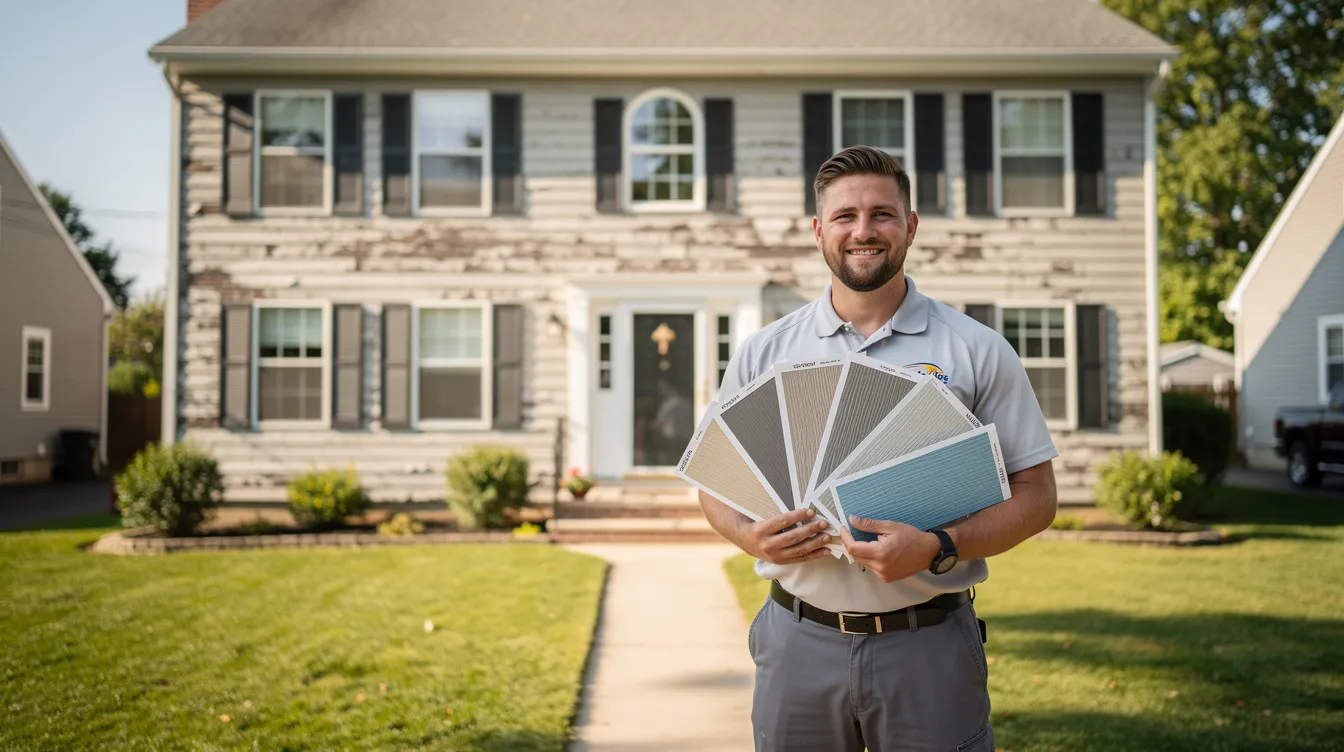
- If you plan to buy fiber cement siding or choose fiber cement siding for resale appeal, ask to see real samples in natural light.
- American Home Remodeling can show before-and-after photos from Essex, Morris, Union, Sussex, and Bergen projects.

Other Cost Considerations: Installation, Repairs, and Long-Term Value
Siding quotes in New Jersey vary because each home has different tear-off needs, sheathing conditions, flashing details, and trim.
- Fiber cement installation is more labor-intensive and can require stronger scaffolding than lightweight vinyl.
- Small vinyl damage is often repaired by swapping panels; fiber cement repairs may involve replacing boards and repainting for color match.
- Leading fiber cement brands often offer long substrate warranties, while quality vinyl may offer limited lifetime material coverage for the original owner.
- Fiber cement siding is made from sustainable materials such as cement, sand, and cellulose fibers, which have a minimal environmental footprint and are recyclable.
- Vinyl siding is made from PVC, a plastic derived from petroleum, which is non-biodegradable and contributes to environmental pollution during its production.
- Fiber cement siding does not contribute to landfill waste at the end of its life, as it is recyclable and non-toxic, unlike vinyl siding which adds to long-term pollution.
- Homeowners concerned about greenhouse gasses and the non biodegradable nature of PVC often prioritize durability and fiber cement's robustness, which is a common focus for Ocean County siding projects exposed to coastal conditions.
- Housewrap, kick-out flashing, window flashing, and moisture details decide how long both materials last in wet NJ springs and snowy winters. See NJ code guidance through the New Jersey Department of Community Affairs.
How American Home Remodeling Helps NJ Homeowners Choose the Right Siding
American Home Remodeling is a licensed, insured general contractor based at 89–91 Coit Street in Irvington, NJ, with experience installing vinyl and fiber cement across Essex, Morris, Union, Sussex, and Bergen Counties.
- Consultations include an exterior inspection, product discussion, and recommendations based on budget, energy efficiency, fire resistance, aesthetics, and time in the home.
- The team can integrate related work such as roofing, gutters, windows, masonry, home additions, kitchen remodeling, bathroom remodeling, and basement conversions, supporting full-home upgrades like those described in their Somerset County siding services.
- Financing options include 100% financing for qualified customers and promotional 0% interest plans up to 18 months.
- American Home Remodeling coordinates permits and inspections and understands township requirements throughout its New Jersey service area.
- Get two or three quotes, but make sure each includes comparable scope items so cement board siding cost vs vinyl can be evaluated fairly.
- Professional contractors should specify brand, profile, thickness, housewrap, flashing, trim, disposal, warranty, and whether everything will be installed correctly.
Frequently Asked Questions About Cement Board Siding Cost vs Vinyl in New Jersey
Is fiber cement (cement board) siding worth the higher cost in New Jersey?
- Often, yes, especially for long-term owners of 10+ years who want fire resistance, low warping risk, storm performance, and premium curb appeal.
- In higher-priced Essex and Bergen markets, fiber cement can support stronger perceived value at resale.
- If you plan to sell soon or need the lowest upfront investment, quality vinyl may be the better short-term choice.
How do I estimate my home’s siding square footage and rough project budget?
- Multiply your home’s perimeter by wall height, then adjust for gables, dormers, windows, and doors.
- Example: a 40 ft by 30 ft two-story colonial has a 140 ft perimeter. At roughly 16 ft high, that equals about 2,240 square feet of wall area.
- In NJ, that may suggest rough ranges of $9,000–$18,000 for vinyl and $20,000–$32,000 for fiber cement, before final trim and repair details.
Does either siding type qualify for energy efficiency rebates or incentives in NJ?
- Standard siding alone rarely qualifies for statewide energy rebates.
- Insulated vinyl or added continuous exterior insulation may help as part of a broader envelope upgrade.
- American Home Remodeling can coordinate siding with insulation, windows, roofing, or other improvements that may improve your home’s overall energy profile.
How long does siding replacement usually take in Essex, Morris, Union, Sussex, or Bergen Counties?
- Straightforward vinyl projects on average NJ homes often take about 3–7 working days after permits and materials are ready.
- Fiber cement projects often take about 5–10 working days because the material is heavier and trim details take longer.
- Weather, township inspections, and hidden sheathing repairs can add time, especially in spring and fall.
What’s the best way to compare siding quotes from different contractors?
- Confirm each quote lists material type, brand, product line, thickness, housewrap, flashing, trim, soffit, tear-off, and disposal.
- Verify license, insurance, local references, workmanship warranty, and manufacturer warranty terms.
- Ask each contractor to price both fiber cement and vinyl when possible so vs vinyl siding comparisons use the same scope.
Ready to Compare Cement Board and Vinyl Siding for Your NJ Home?
- If you live in Essex County, Morris County, Union County, Sussex County, or Bergen County, schedule a free, no-obligation siding consultation with American Home Remodeling.
- Visit American Home Remodeling at 89–91 Coit Street, Irvington, NJ 07111, call 973-374-6700, or request an appointment online through the company website.
- The team installs both vinyl and fiber cement siding and provides clear written proposals covering cost, energy efficiency options, design choices, and long-term value.
- Use your consultation to review samples, see local project photos, and decide which new siding best fits your budget, climate, and plans for your home.